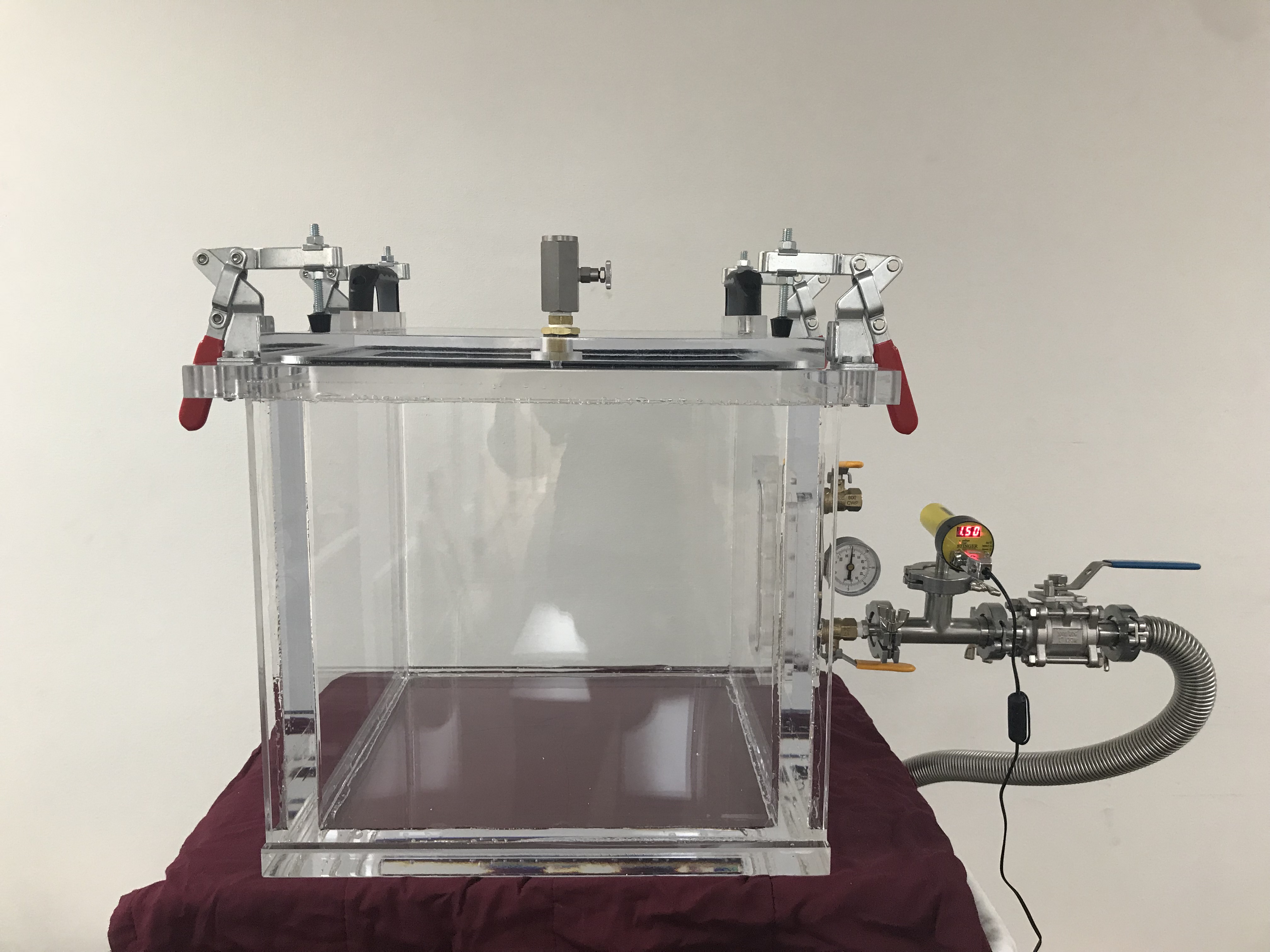
Dye Ingress Test inside a Transparent Test Chamber

Dye ingress is most commonly used as a container closing integrity test in order to quality test sterile products. This test is mostly done in the Pharmaceutical Industry or Medical Packaging Industry as means to test for product defects in rigid container. It is based on the concepts set forth by the ASTM 4991 and used as a seal integrity test. In addition to rigid containers, blister packs and heat-sealed trays, can also be tester in accordance to this method.

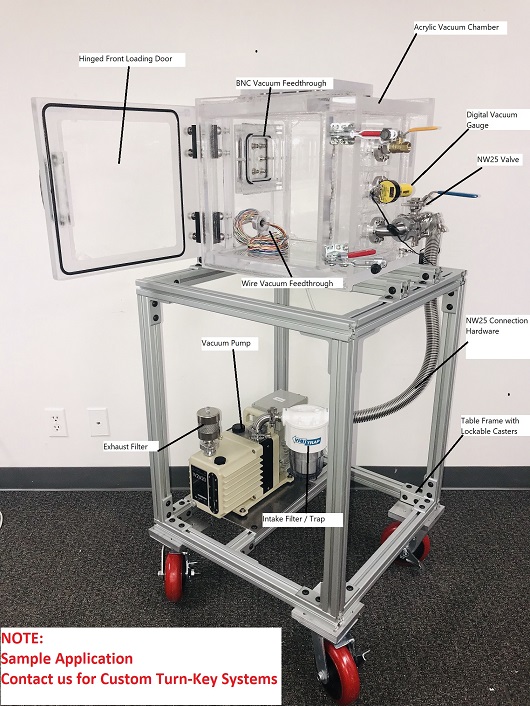
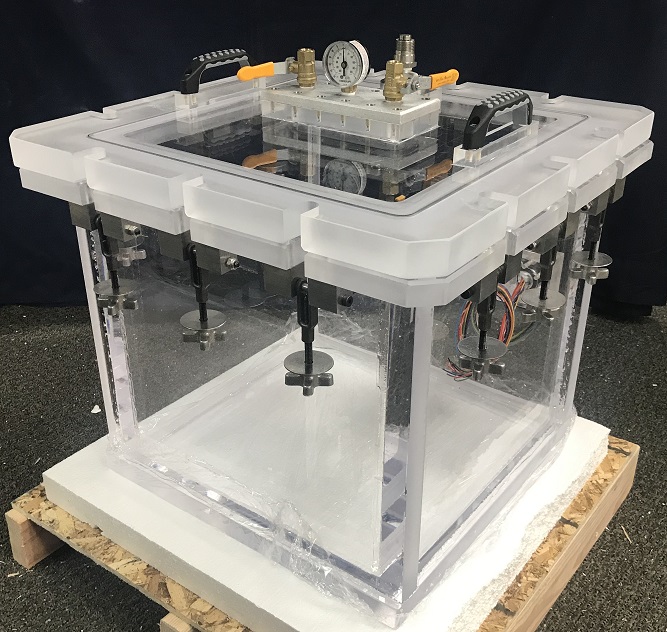
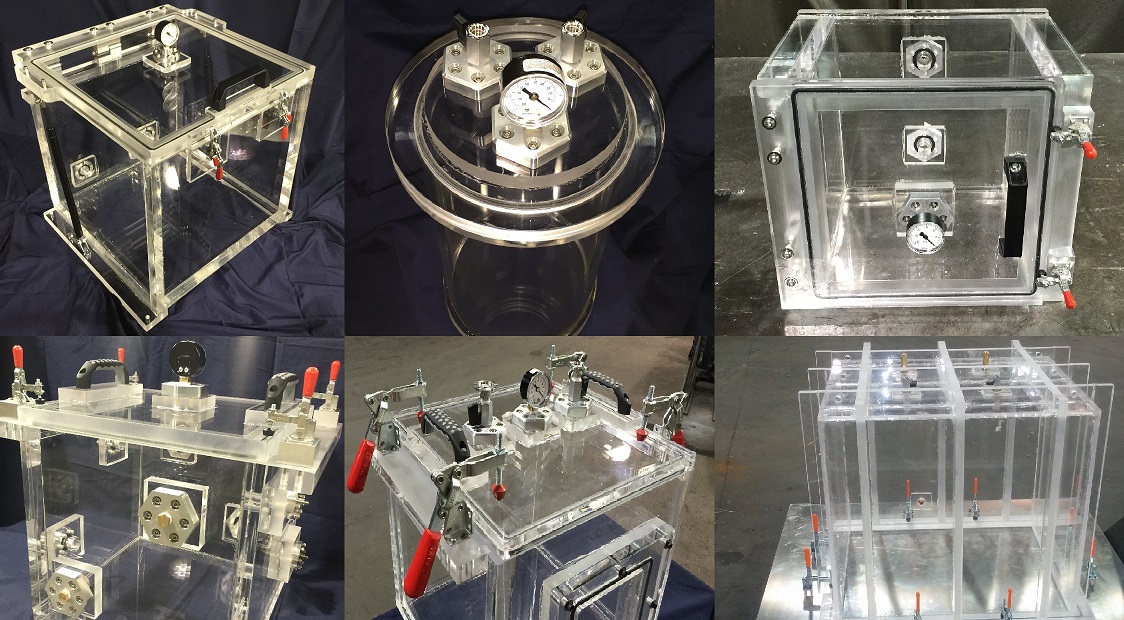
Our Acrylic Vacuum Chamber is the perfect candidate for the ASTM 4991 Test because the method calls for a “transparent test chamber”.

Fortunately, you have many to choose from since we have a large selection of transparent test chambers. Each of our vacuum chambers comes as a standard with a dial vacuum gauge and two vacuum valves (venting valve and vacuum valve)

Are you performing container closing integrity tests? If you are, contact us so that we can help you with your quality control procedures.

Similar Items

We are an Engineering Excellence Company. There is a tremendous amount of valuable resources and information regarding vacuum systems and vacuum technology; check them out by clicking on the links below.

Helium Leak Testing Systems
Helium Leak Testing Systems are instruments which detect leaks in specimen by detecting present of helium. Helium is used as a tracer gas to detect and quantify a leak. For example, a test specimen is filled with helium and placed into a test chamber, a vacuum is pulled and a helium mass spectrometer is connected to the test chamber. If helium is detected, it is due to the fact that it has escaped from the specimen through a leak path. Helium Leak Testing is a qualitative and quantitative method of detecting product leaks.
Rotary Vacuum Feedthroughs
Rotary Vacuum Feedthroughs are devices that will enable you to physically rotate a specimen inside the vacuum chamber while vacuum present without decreasing the vacuum.
Our Work: Electronic Component Testing of Satellites at High Altitudes
Electronic Components of Satellites behave differently in outer space as compared to how these behave at sea level. How do you know that your satellite will survive outer space? How do you confirm that your circuit boards will function properly at higher altitudes? There is only one way to find out, and that is to test and validate your design.
Related Articles: Vacuum Levels of Acrylic Vacuum Chambers
In this article we will discuss the vacuum levels of an acrylic vacuum chamber. This article also covers the leak rate or the leak tightness of the acrylic chamber. Additionally, we are going to recommend a rule of thumb used for vacuum pump selection based on the size of the vacuum chamber.