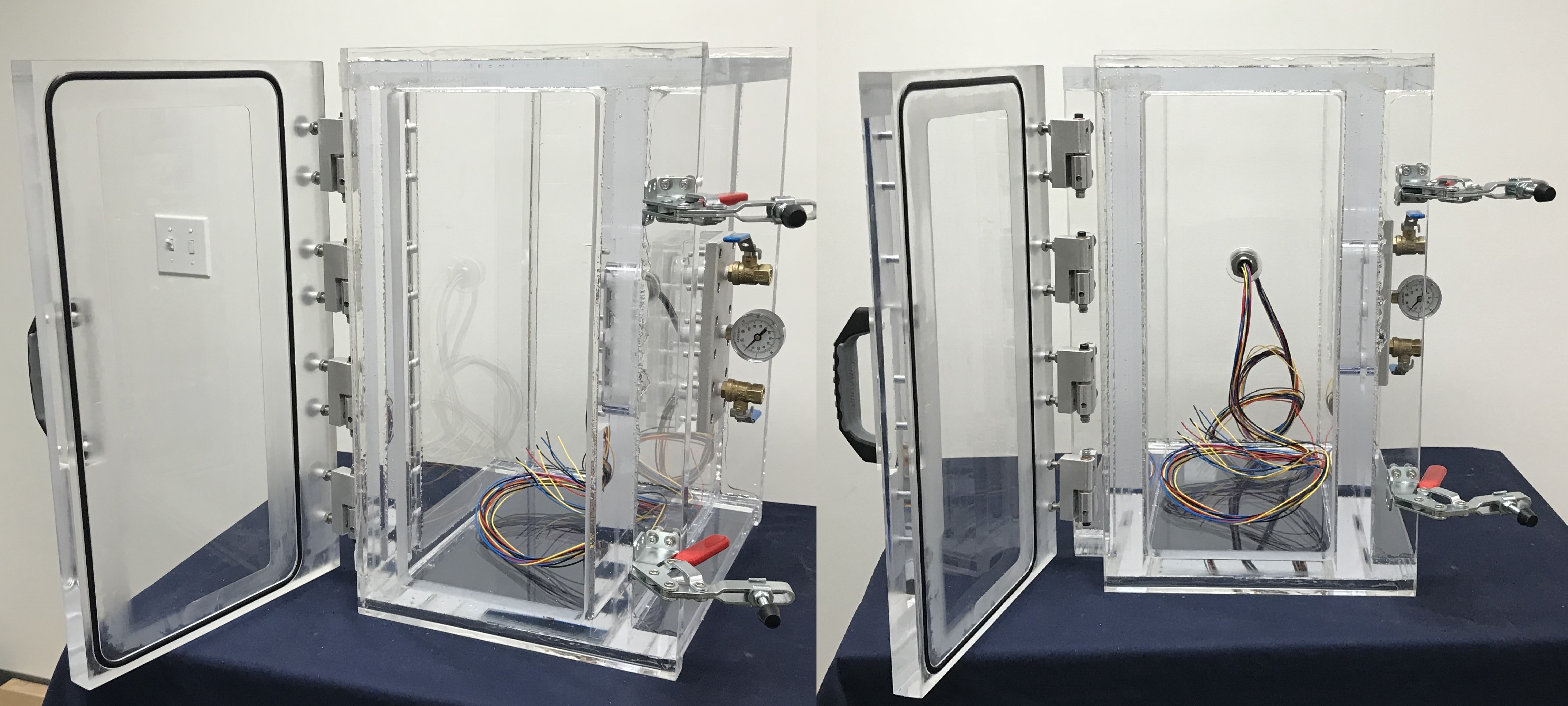
Clear Chamber for Automotive Components Production Testing

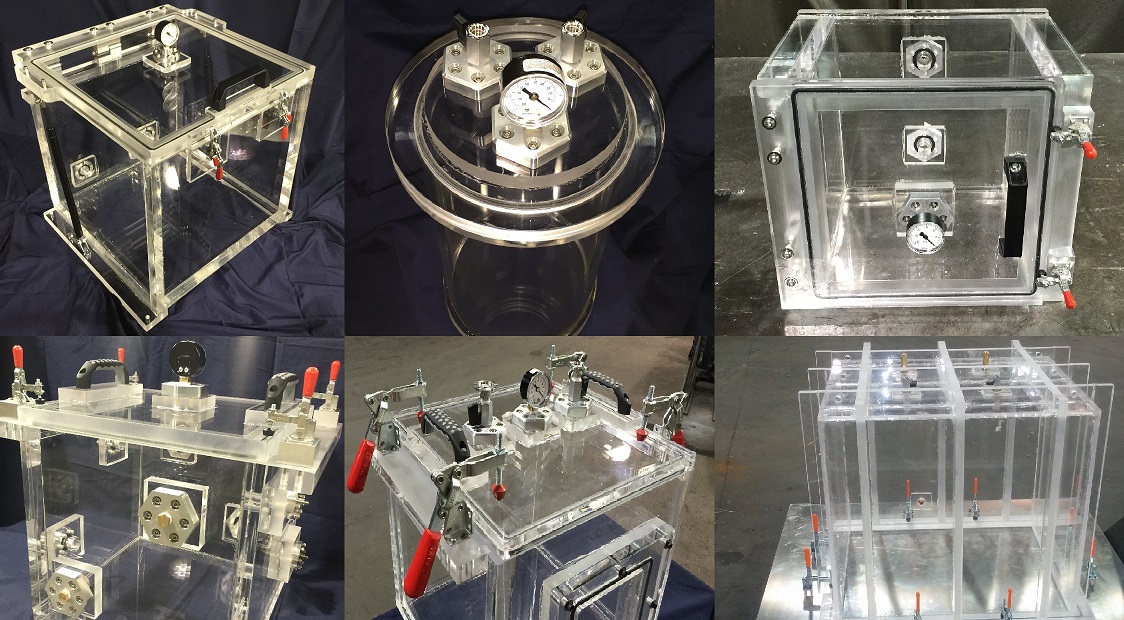
It is vital to perform Production Quality Control testing on Automotive components during manufacturing. Our Client used the chamber above to perform tests on several automotive components coming of the production line.

The Chamber you are looking at is about 12 inch Wide, 18 inches Deep, and 20 inches High. This is a custom design and slight modification from our regular front load, hinged door model. Our Client was also looking to connect and run electricity from the outside towards the inside of the chamber and wanted to keep the vacuum constant. An electrical vacuum feedthrough allows the operator to run electrical signals into the chamber without compromising the vacuum levels. The feedthrough will work even at low or high vacuum testing operations.

Are you in the automotive industry and looking for a good vacuum system? Contact Us to see how we can be of service.

Some of our Popular Items

We make Robustly Designed and Quality Engineered Systems. You should check out some of our other items we carry; click on the links below.
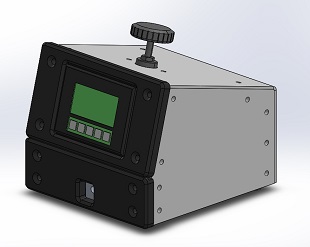
Vacuum Bubble Emission ASTM 3078 Leak Testing Systems
Bubble Emission (ASTM 3078) Leak Testing Systems are instruments that are used during the Quality Control process discover and locate leaks or seal integrity failures. Leaks are detected by submerging the specimen into a tank of water, applying a vacuum, and inspecting the submersed specimen for bubble emission. Our Bubble Leak Testing Systems are designed and built to conform to the ASTM D3078 protocol standard.
Digital Vacuum Gauge Instruments
A Digital Vacuum Gauge is an instrument which precisely measures a vacuum level inside a vacuum chamber. Unlike a rough dial vacuum gauge, which shows only where the vacuum chamber is roughly with an error of up to 3% (a high as 1 inHg) a digital vacuum gauge will show vacuum levels up to 3 significant figure in Torr and millitorr – this makes the digital vacuum gauge ten thousand times more accurate than the dial vacuum gauge.
Our Work: Chamber for Vacuum Extrusion System
This is a custom acrylic vacuum chamber build for a high volume manufacturer of parts which are fabricated using vacuum extrusion techniques. The challenge was to build a vacuum chamber system which mated on two perpendicular surfaces; on the bottom and on the rear of the chamber. This was accomplished by incorporating a double gasket mechanism on the bottom and incorporating a clamping mechanism on the rear.
Related Articles: Force Decay Leak Testing
Force Decay Leak Testing is a very popular quantitative leak testing method used to quality test package and product integrity due to its ability to detect small leaks which cannot be seen through visual inspection. In this method, the test specimen is internally inflated by either internal pressurization or vacuum force. The inflated test specimen will, in turn, apply a force on a pressure transducer. Finally, the change in force applied by the inflated specimen over a specified time is observed.