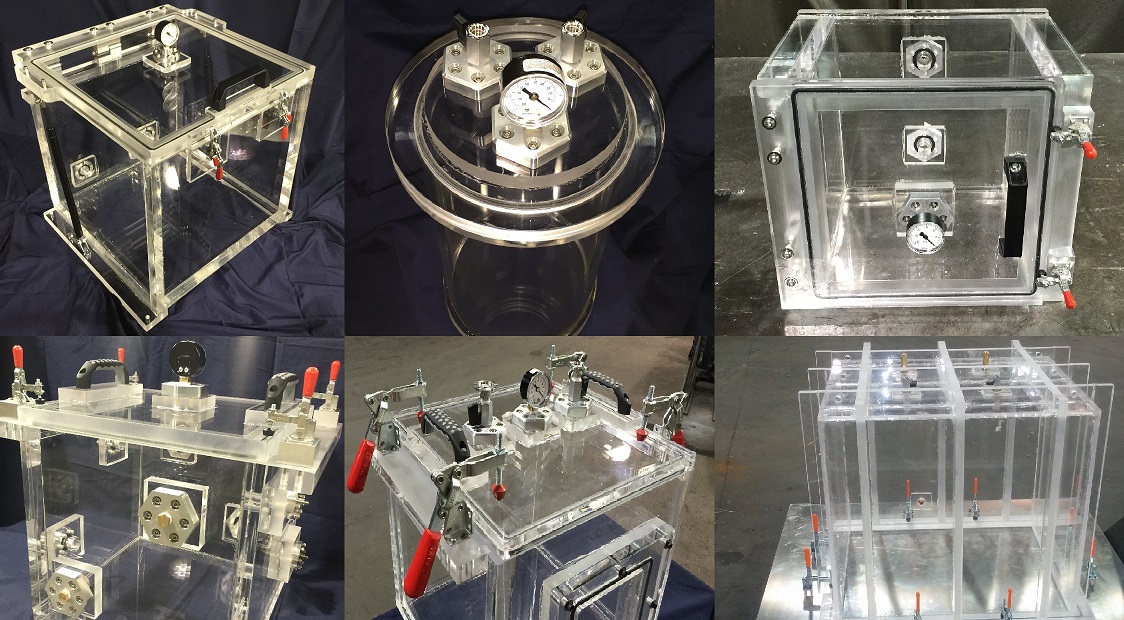
Case studies demonstrating our expertise in vacuum systems design and manufacturing
vacuum-extrusion-unit
Vacuum Extrusion Unit

Vacuum Extrusion

A car part manufacturer consistently experienced a problem with regards to their vacuum extrusion unit. Their vacuum extrusion chamber unit was leaking; hence they were not able to properly outgas their product. They went through several local job shops until they ultimately contacted us because they were urgently looking for ways to decrease the absolute pressure inside their vacuum extruder. SANATRON accessed the situation, designed, and built a new vacuum extrusion chamber that has worked very nicely ever since (4 years and going strong)
testing-of-high-potential-voltage-cable-discharge-arc-using-a-cylindrical-vacuum-chamber-03
Hi Pot Discharge Testing

Hi Pot Discharge Testing

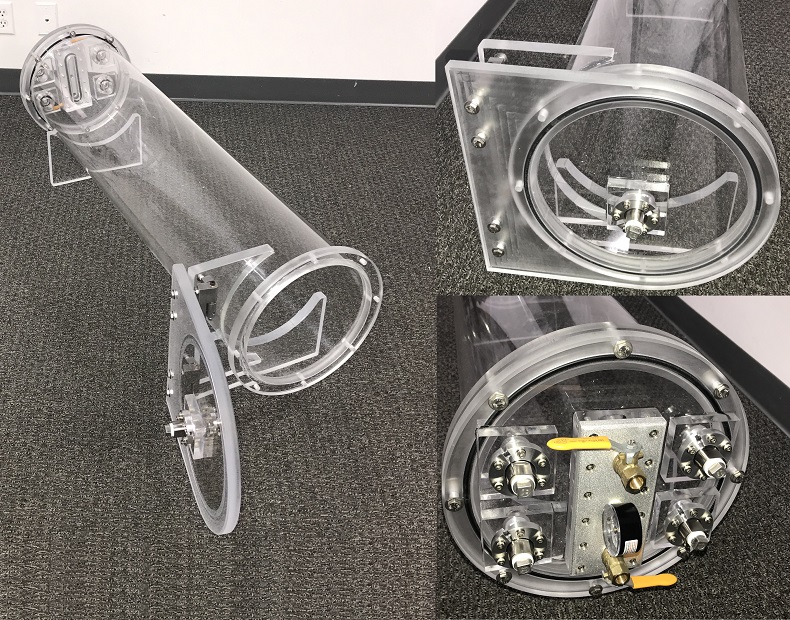
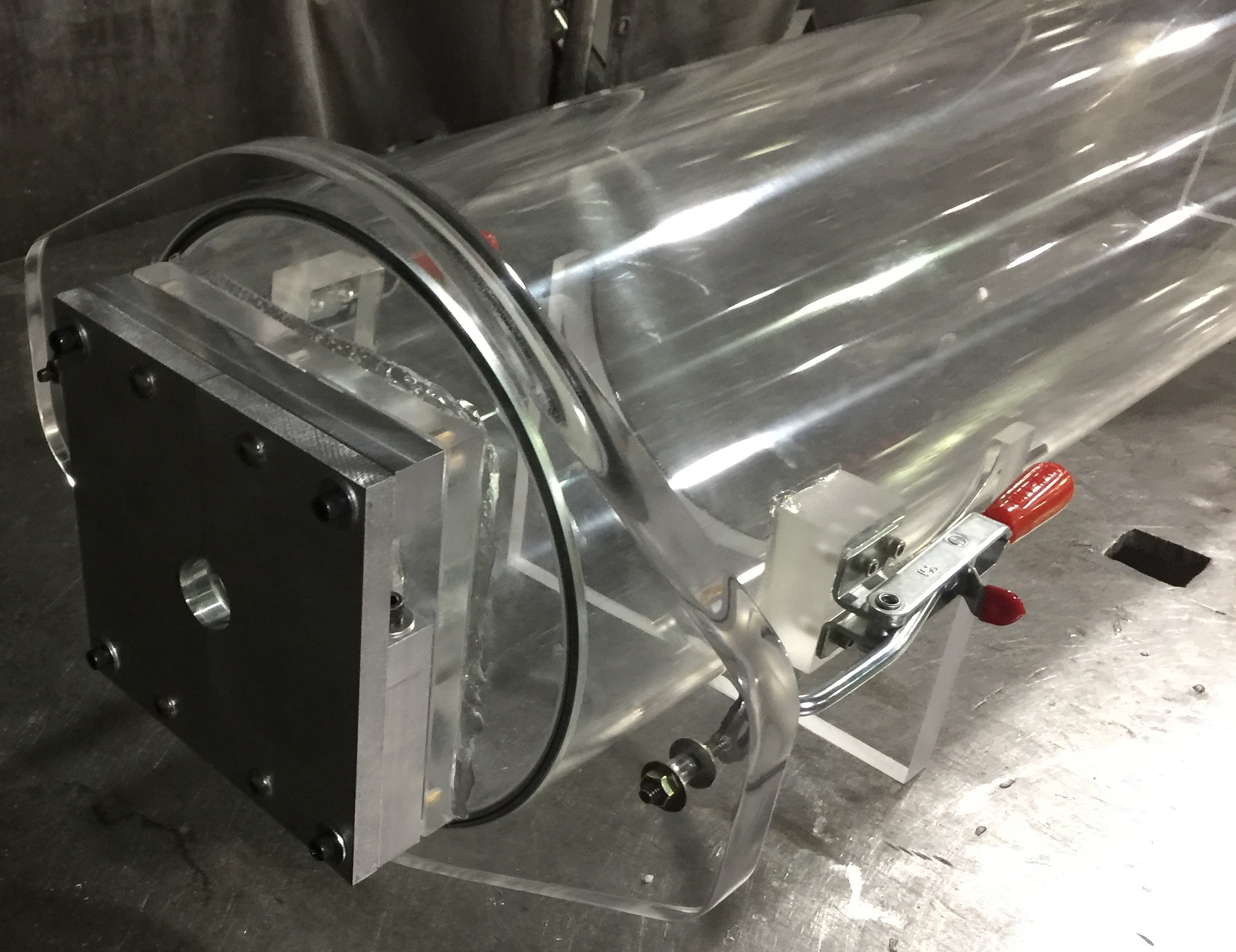
An aerospace supplier ran into trouble when their contractor fell through on delivering Hi-Pot cables. Our client was promised that their Hi-Pot cables would be thoroughly tested before delivery by their vendor. Well, delivery time came and their vendor was unable to design a high altitude testing system. Our client was stuck with hundreds of thousands worth of untested Hi-Pot cables. They ultimately found SANATRON who because we have the experience to design an altitude test unit capable of testing Hi-Pot cables with complex geometry.
aerospace-and-satellites-test-system
Aerospace and Satellites Test System

Aerospace and Satellites Test System

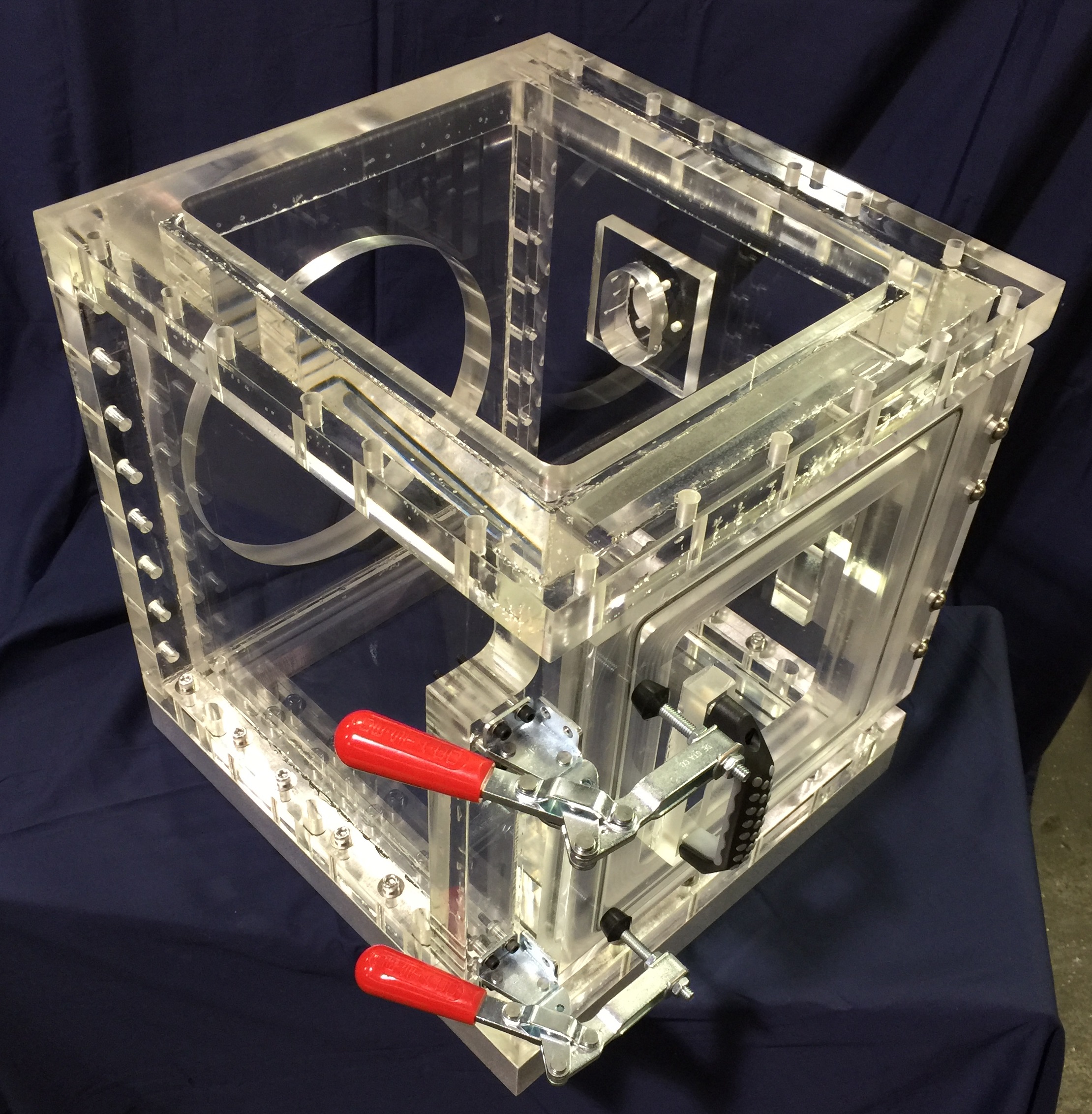
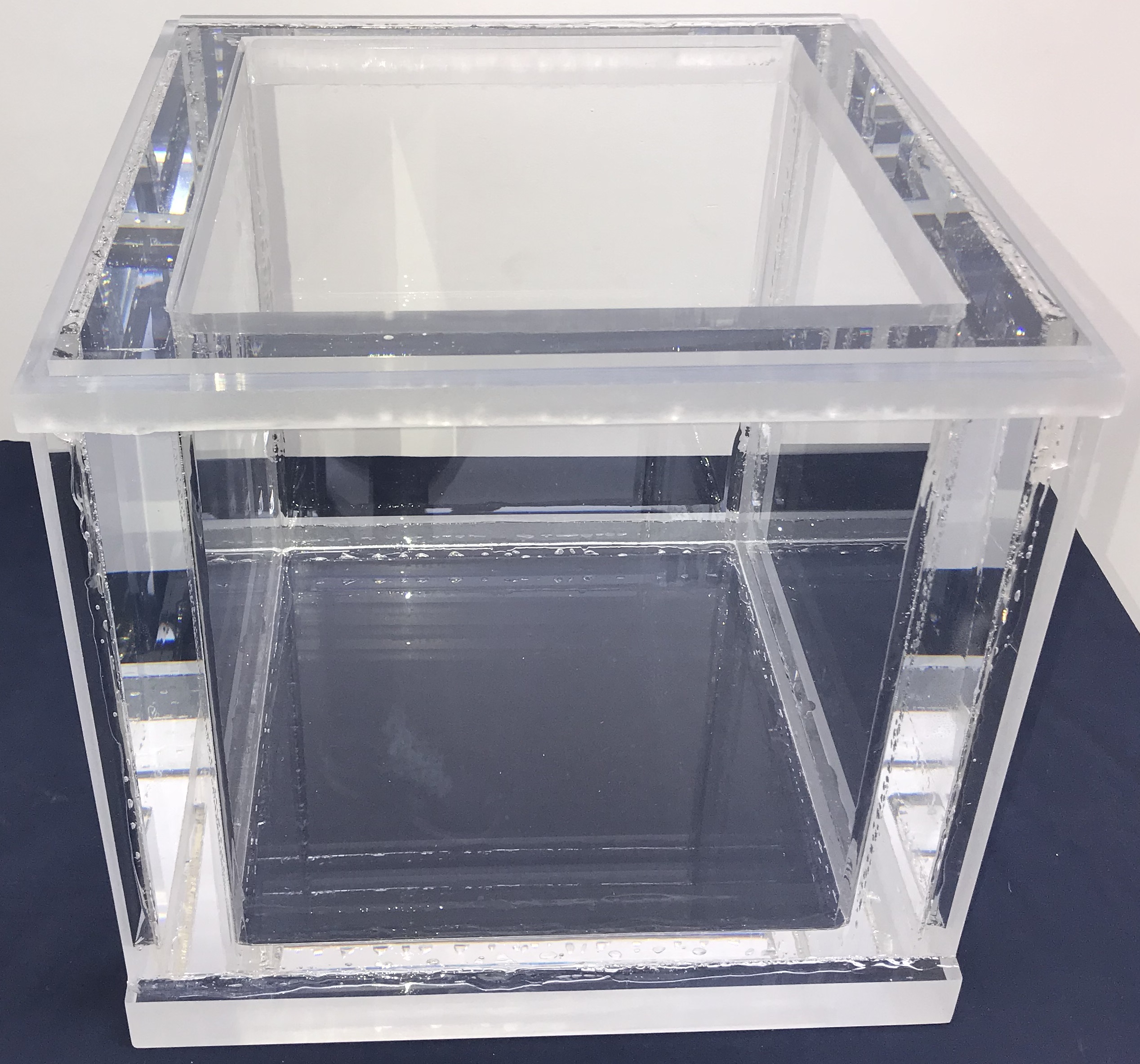
This client found SANATRON after someone else failed to build a robust acrylic vacuum chamber. After just several cycles, the walls gave out and separated creating a leak, not to mention a safety risk. SANATRON was able to deliver a more robust vacuum chamber because of many years of design experience and quality manufacturing. Our acrylic walls are interlocked and bonded with an acrylic adhesive made from a mixture that is a trade secret. The risk of wall separation, beveling, and leakage are effectively eliminated.

Did you know that we carry a many more products?

We treat our customers well by Over-Delivering on our Promises (reason why we are Highly Rated on Google My Business). You should check out some of our other items we carry; click on the links below.
Helium Leak Testing Systems
Helium Leak Testing Systems are instruments which detect leaks in specimen by detecting present of helium. Helium is used as a tracer gas to detect and quantify a leak. For example, a test specimen is filled with helium and placed into a test chamber, a vacuum is pulled and a helium mass spectrometer is connected to the test chamber. If helium is detected, it is due to the fact that it has escaped from the specimen through a leak path. Helium Leak Testing is a qualitative and quantitative method of detecting product leaks.
Liquid and Gas Vacuum Feedthroughs
A Liquid and Gas Vacuum Feedthroughs are tubes that will allow you to run liquid or gas into your vacuum chamber without contaminating the vacuum levels or vacuum chamber in general. Say you are looking to run a coolant into the vacuum chamber and cool a component you are testing. You can simply install a liquid and gas vacuum feedthrough are run your coolant towards your test specimen.
Our Work: Vacuum Storage of Pharmaceutical Products and Medical Supplies
A pharmaceutical manufacturer contacted us to build them a large vacuum storage system for their pharmaceutical products. They were looking for as much footprint as possible which is why they got a two-chamber system from us. They needed a total of 6 shelves per chamber including trays. Finally, they were looking to have both chambers to be placed on a table frame assembly with lockable swivel casters. What you are seeing is a two chamber system, each chamber is our 20 inch cube acrylic vacuum chamber, front load hinged door. Each chamber can be accesses independently while the other is under vacuum. The trays can be easily loaded and unloaded. This whole system can also be moved to anywhere in their facility.
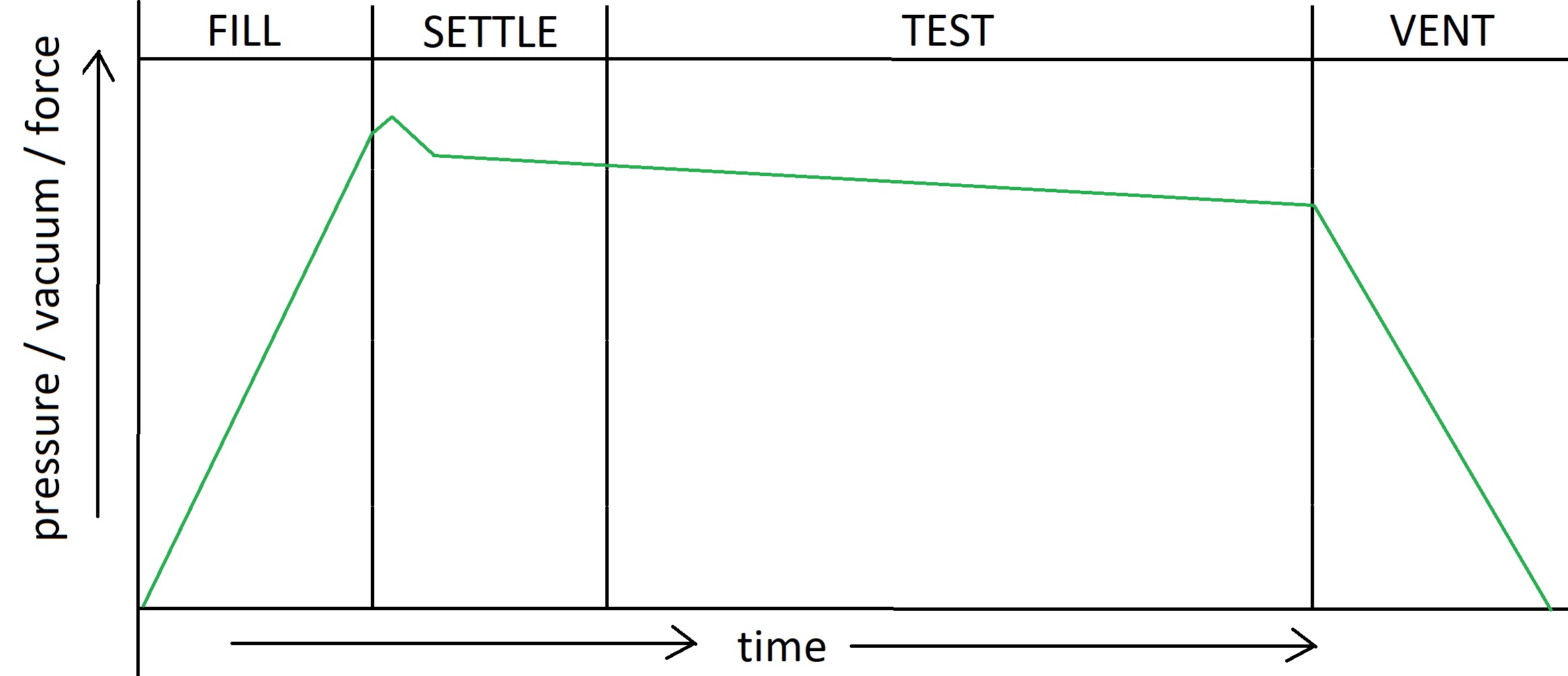
Related Articles: Anatomy of the Pressure Decay, Vacuum Decay, and Force Decay Curve
How do you know that you have a good part during your leak test? In order to understand your leak test, you must first understand the Test Decay Curve and what it tells you about your test specimen. There is a certain way that a test specimen behaves during the leak test.