Aerospace Custom Vacuum Chamber

Aerospace Custom Vacuum Chamber
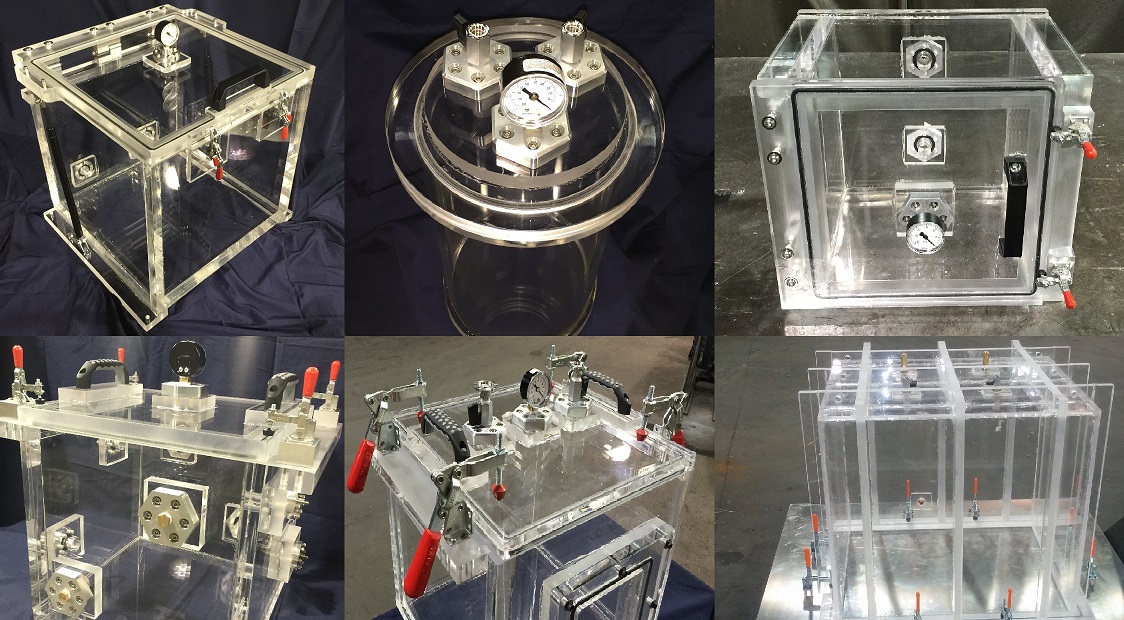
An aerospace company reached out to us because the needed someone to make a custom vacuum chamber for them. We are always happy to look at what we can do for them to make it happen. They did not tell us much about the details of their projects. This is sometimes the case because when work is done on proprietary technology, we do not expect to know every single detail.

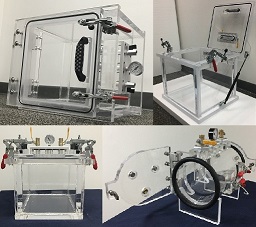
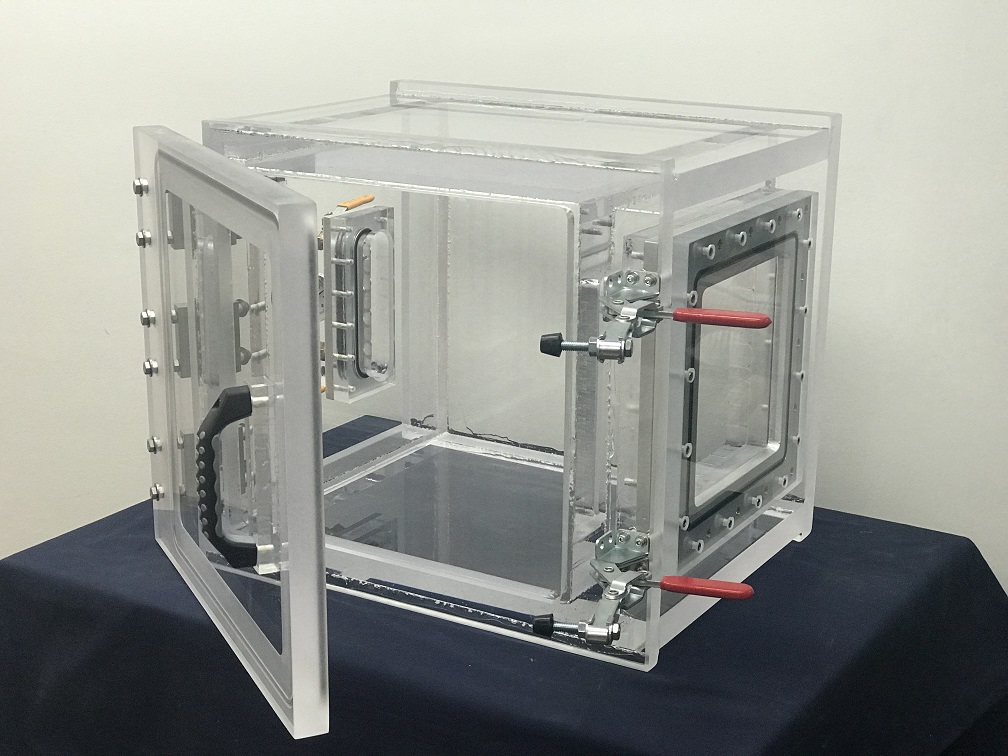
They had a need for a vacuum chamber with inside dimensions of 42 inch Wide, 42 inch inch Deep, by 12 inch High. Furthermore, the vacuum chamber would need to have O-Rings on both sides of the large 42x42 wall openings. What we came up with was on O-Ring groove present inside the flange. Our O-Ring groove is precision routed and dove tailed. The Dovetail will hold the O-Ring in place even if it is flipped upside down. This is not something our competitors do which is why their O-Ring will fall out if the lid is either turned outside down or if the lid is shaken; sometimes the O-Ring will pop out randomly. This is why it is vital to have the dovetail O-Ring Groove. Another critical feature is precision routing. When routing an O-Ring used for vacuum applications, router bit, feed, speed, cooling, and vibration are of utmost importance. We have spent more than 14 years perfecting our process which is why our acrylic vacuum chambers yield superior vacuum performance rivaling our competitors chambers made from stainless steel. Our acrylic is stronger than their steel!

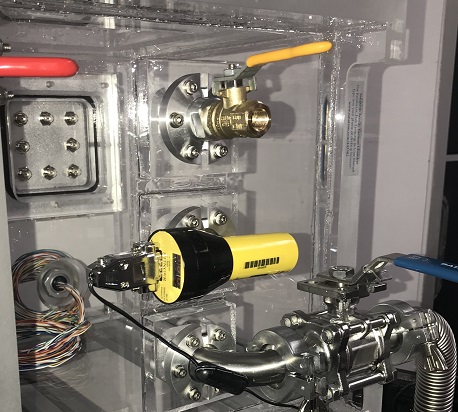
The Sidewalls are 12 inch High and were made from 2-inch Thick Acrylic. If you look to the Left of the chamber, you will notice a vacuum gauge and two valves. You will also notice that the top and bottom walls are flanged and slotted which will allow our customer to easily attach their top and bottom wall to our custom-made chamber. Do you need to make a custom vacuum chamber? Are you looking for great quality and robustness? Reach out to us to see what we can do for you.

Some of our Popular Items

We make Robustly Designed and Quality Engineered Systems. You should check out some of our other items we carry; click on the links below.

Force Decay Leak Testing Systems
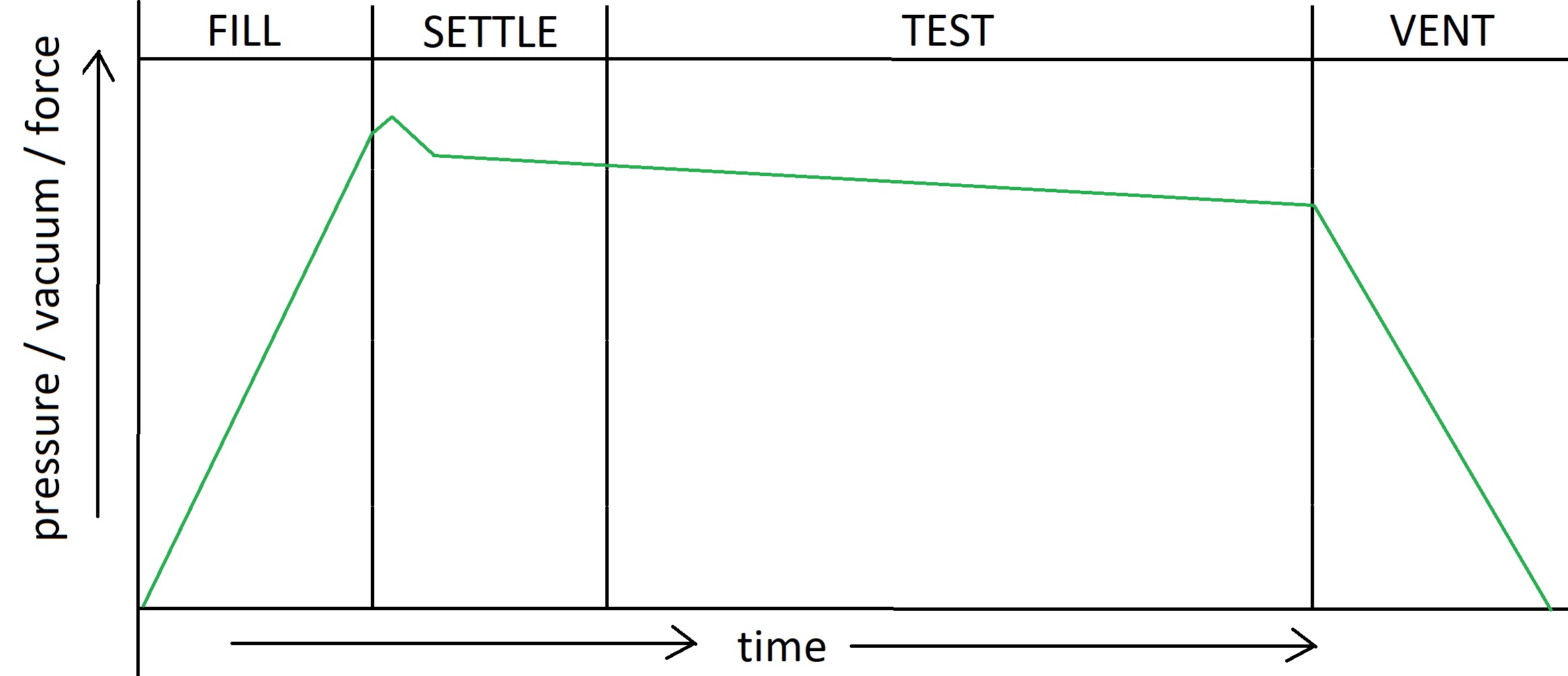
Force Decay Leak Testing Systems are instruments that detect and quantify leaks in a test specimen through measuring the drop in force an inflated specimen applied onto a pressure transducer. The specimen is placed into a vacuum chamber, a vacuum is pulled, and the test sample inflates. As the test sample inflates, it applied a specific force onto the force transducer. This force is measured and recorded over time. If a leak exists, the specimen will deflate and lose pressure, as a result, the force it applies onto the force transducer will decrease. This in turn will enable for detection and quantification of a leak in the specimen.
Altitude Simulation Controller Instruments
An Altitude simulation Controller is type of vacuum controller that simulates a certain altitude because altitude can be derived from vacuum levels. An altitude simulation controller will enable you to hold your vacuum level at a certain altitude equivalent of testing, run an altitude vs time profile, or rate of change of altitude vs. time. Further options include a vacuum pump relay that will control when the vacuum pump turns on and a vacuum valve.
Our Work: Altitude Testing in a Vacuum Chamber
It is not a secret that you can simulate a certain altitude in a vacuum chamber. The good thing about Acrylic Vacuum Chambers is not only that you can simulate an altitude of up to 250,000 feet, you can also fully view your test specimen during your testing operation.
Related Articles: Visual Inspection Quality Testing of Heat Sealed Packages
Visual inspection is an attractive option because it does not require the purchase of any additional equipment. There are several arguments against Visual Inspection of heat seals; the argument against visual inspection is that visual inspection is subjective, unreliable, operator dependent, or not a valid method of inspection. However, if you have the correct training, procedures, and documentation in place, visual inspection can become a powerful tool in your quest for better packaging.