Vacuum Soil Sampling and Extraction for Geological Research

vacuum-soil-sampling-and-extraction-for-geological-research-01
Vacuum Soil Sampling and Extraction for Geological Research
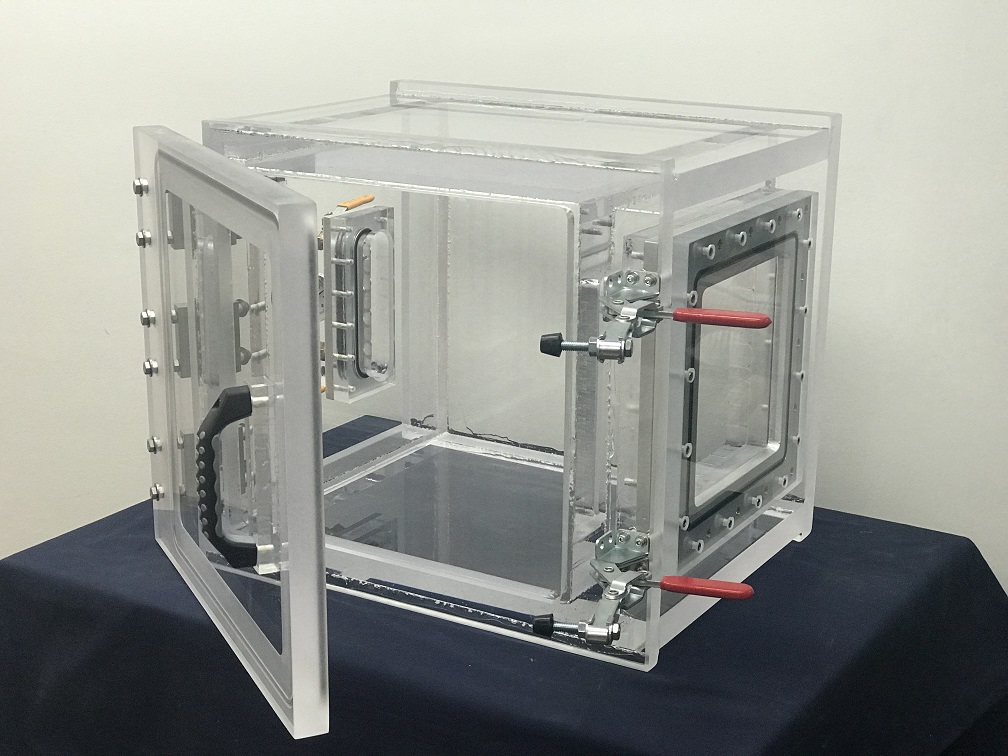
What you see here are two identical vacuum chambers with a spring supported lid which are used in vacuum soil testing and extraction methods. Our client asked us to provide them with two vacuum chambers capable of reaching vacuums below 1 Torr absolute.

Since the test specimen preparation time is much shorter than the vacuum sampling time, it makes much more sense from an efficiency standpoint to use two vacuum chambers. In addition, the test is done in two stages using one chamber as a staging chamber and the other one as the sampling and extraction chamber.

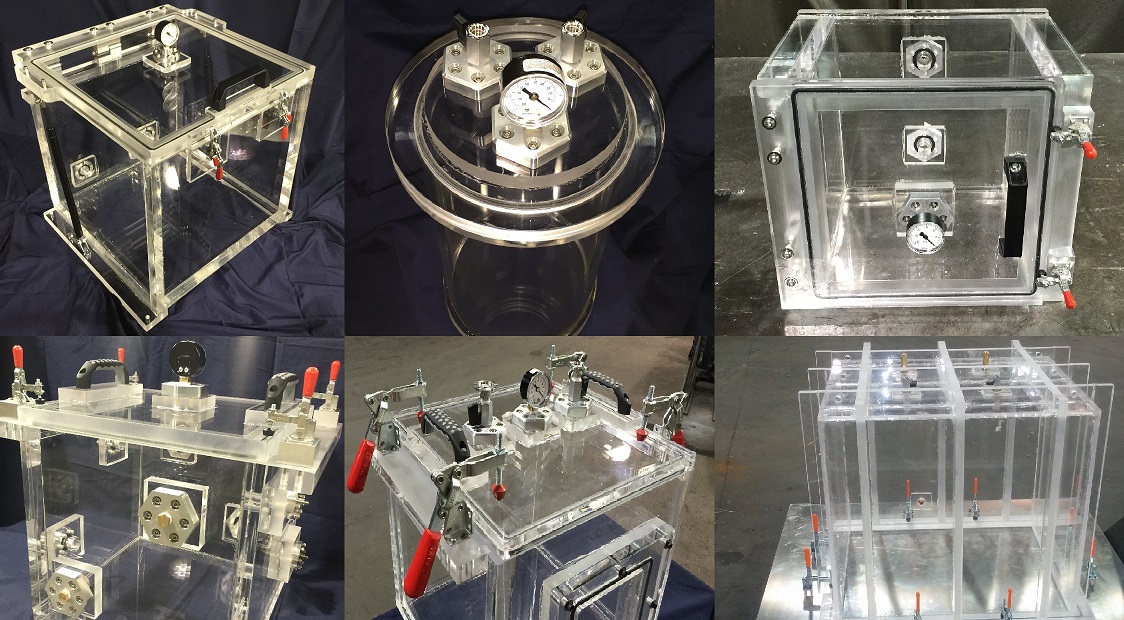
A spring support lid chamber is the ideal choice for such applications. The lid stays open as the samples are loaded into the chamber. Then, after the chamber is loaded with the test specimen, the lid is closed and clamped and vacuum can be applied to the chamber. This chamber also comes as a standard with a vacuum valve, a venting valve, and vacuum gauge, a handle, two clamps, and two spring to support the lid.

Similar Items

We are an Engineering Excellence Company. Check out some of our other items we carry that you can combine/integrate with your systems or projects.

Force Decay Leak Testing Systems
Force Decay Leak Testing Systems are instruments that detect and quantify leaks in a test specimen through measuring the drop in force an inflated specimen applied onto a pressure transducer. The specimen is placed into a vacuum chamber, a vacuum is pulled, and the test sample inflates. As the test sample inflates, it applied a specific force onto the force transducer. This force is measured and recorded over time. If a leak exists, the specimen will deflate and lose pressure, as a result, the force it applies onto the force transducer will decrease. This in turn will enable for detection and quantification of a leak in the specimen.
Micro-D Vacuum Feedthroughs
Micro D Vacuum Feedthroughs are Micro D connectors rated for vacuum and are generally installed on the vacuum chamber wall. You can then connect from the outside to the inside of your chamber.
Our Work: Vacuum Storage of Pharmaceutical Products and Medical Supplies
A pharmaceutical manufacturer contacted us to build them a large vacuum storage system for their pharmaceutical products. They were looking for as much footprint as possible which is why they got a two-chamber system from us. They needed a total of 6 shelves per chamber including trays. Finally, they were looking to have both chambers to be placed on a table frame assembly with lockable swivel casters. What you are seeing is a two chamber system, each chamber is our 20 inch cube acrylic vacuum chamber, front load hinged door. Each chamber can be accesses independently while the other is under vacuum. The trays can be easily loaded and unloaded. This whole system can also be moved to anywhere in their facility.
Related Articles: Rotary Vane Vacuum Pumps, The Definitive Guide
In the article we are going to cover rotary vane vacuum pumps. We will touch upon how they work, what they are used for, when to utilize a rotary vane vacuum pump, its advantages and disadvantages. Perhaps you have noticed that rotary vane vacuum pumps come in all shapes and sizes. On one website, the vacuum pump is less than a $100; on another website you see a vacuum pump quotes at $10,000. I would imagine that you immediately ask yourself what the deal here is.