Portable Pressure Chamber and Custom Vacuum Chamber System

Portable Pressure Chamber and Custom Vacuum Chamber System
This portable pressure and vacuum chamber system is specifically designed and built to operate between an absolute pressure range of 60 kPa to 120 kPa. The pump is both a compressor and a vacuum pump. The maximum achievable vacuum of this pump is -25.5 inHg while the maximum achievable pressure is +15 psi or 30inHg. Keep in mind that if a more powerfully vacuum pump is used, a much higher vacuum is achievable because the acrylic pressure and vacuum chamber is capable of going into as low of a vacuum as the vacuum pump allows. On the over-pressurization side of things, the highest pressure this chamber is rated at is 15 psig (g for gauge pressure). This 15psig overpressure allows for water intrusion testing by simulating 10 meters of water depth when the chamber is filled with water and pressurized to 15 psig.

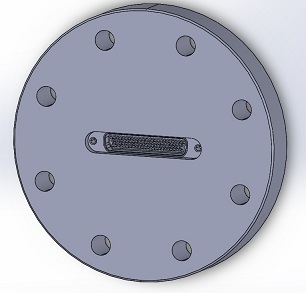
This is a complete system that includes the pressure and vacuum chamber, a vacuum and pressure pump, connection hardware, table frame structure with lockable swivel casters – making this a fully portable unit. There is one additional customization to this chamber and that is that it has an electrical outlet feedthrough on the left wall.

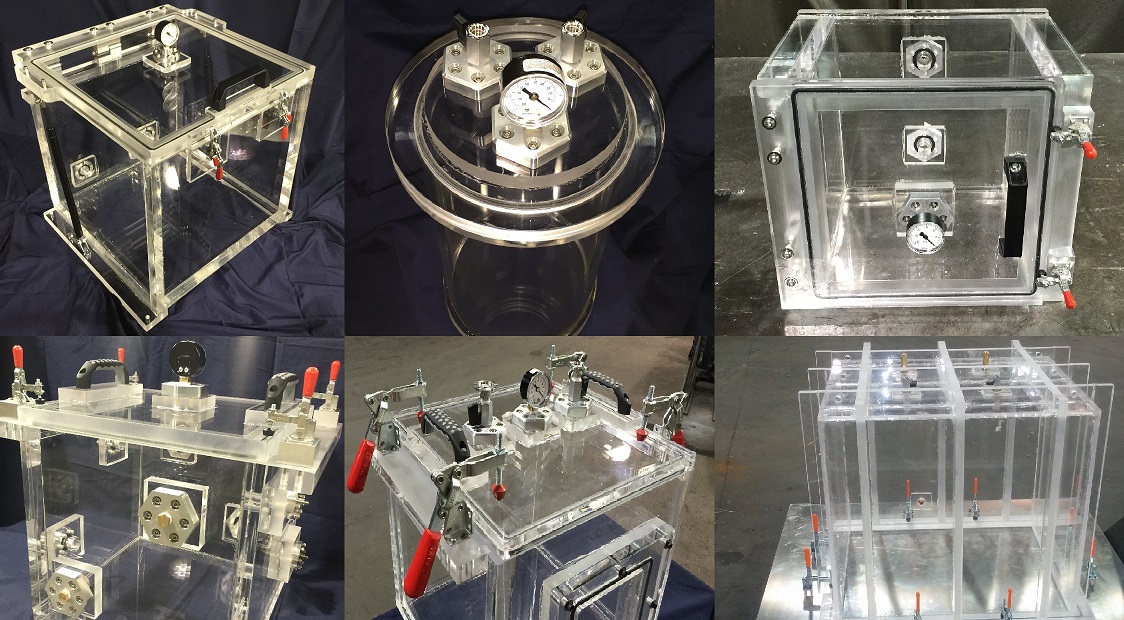
As a standard, each one of our vacuum and pressure chambers comes with two 1/4 inch NPT valves, a dial vacuum and pressure gauge, two lid handles, and a 15 psig safety pressure relief valve which will pop open if the pressure inside the chamber ever exceeds 15 psig. The inside dimensions of this chamber are 20 inch Wide, 20 inch Deep, and 20 inch High. Furthermore, there is a pneumatic toggle valve which allows the user a simple toggle between pressure and vacuum. When the level is toggled towards the front, the chamber is pressurized. On the other hand, when the lever is toggled towards the back, the chamber is subjected to vacuum. The toggle is of course labelled with “Vacuum” and “Pressure” and arrows pointing toward each direction. The lid comes with a total of 16 Thumb clamps, which swing out during openings, and are used to hold the lid down, and keep the O-Ring compressed during pressure operations. Yes, these are not required to be engaged during vacuum operations because the vacuum itself will pull the lid and compress the o-ring by default.

WAIT! Take a look at similar Items you may like…

We are an Engineering Excellence Company. There is a tremendous amount of valuable resources and information regarding vacuum systems and vacuum technology; check them out by clicking on the links below.
Altitude Simulation Systems
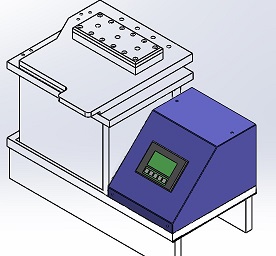
Altitude simulation systems are devices that simulate a certain altitude equivalent by controlling the vacuum inside a vacuum chamber. Altitude is a function of absolute pressure, therefore if a certain pressure is accomplished inside a vacuum chamber, a specific altitude can be simulated from the set pressure. Altitude simulation systems can be configured to not only hold a certain pressure, a complete pressure vs time profile can be programmed to be run. Furthermore, pressure vs time recipes can be loaded and run based on test requirements.
Vacuum Controller Instruments
Vacuum Controller Instruments are devices that measure and control for vacuum inside a vacuum chamber. A vacuum controller consists of a vacuum gauge, control system, and an Human Machine Interface; options include vacuum pump relays and Vacuum valves. A vacuum Controller will enable you to store products at a specified vacuum level or run a vacuum vs. time profile.
Our Work: Research, Development, and Testing of Weather Balloons inside a Clear Vacuum Chamber
A wonderful company (more like one of the best companies in the world) which is currently involved with the research, development, and testing of high-altitude weather balloons, had a need for a vacuum chamber capable of achieving about 100 micro Torr (Micron) of ultimate Pressure for their testing environment. Fortunately, acrylic vacuum chambers are the perfect choice when it comes to Low, Rough, and Medium Vacuum.
Related Articles: Bubble Leak Testing using an Acrylic Vacuum Chamber
Bubble Leak Testing or Bubble Emission Testing is a procedure where leaks are visually detected and located through the emission of bubbles while the test specimen is submerged in water. In this article, we will talk about using an acrylic vacuum box as a leak detection device. We are also going to talk about the advantage, disadvantage, and the bubble leak emission test procedures.