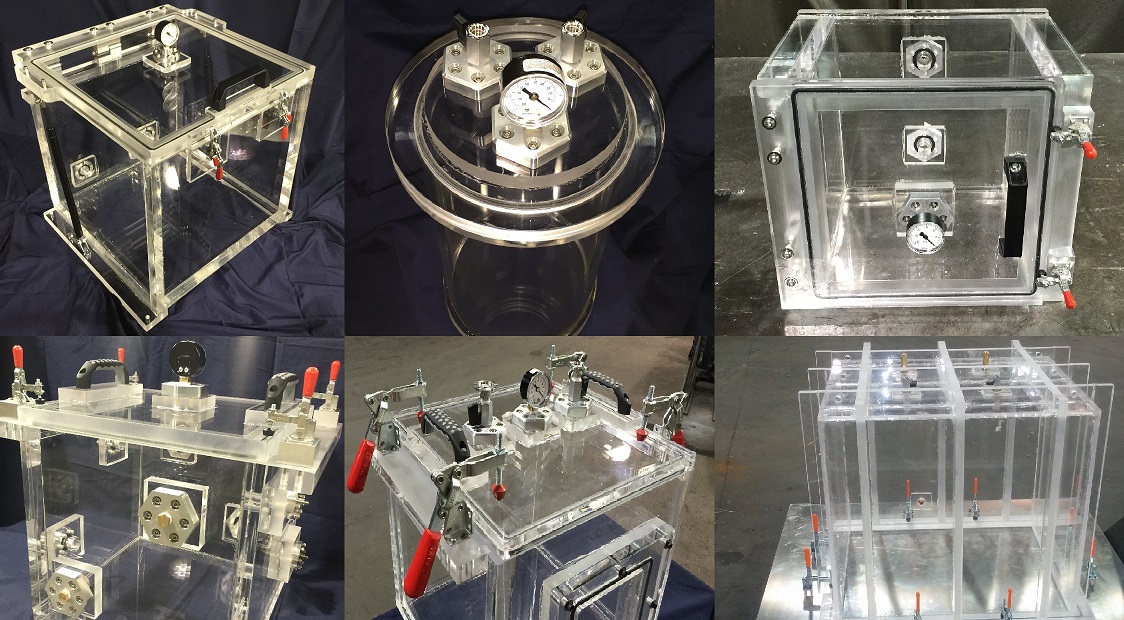
Testing High Voltage Circuit Boards 350V at a Simulated Altitude of 60000 Feet
testing-high-voltage-circuit-boards-350v-at-a-simulated-altitude-of-60000-feet-01
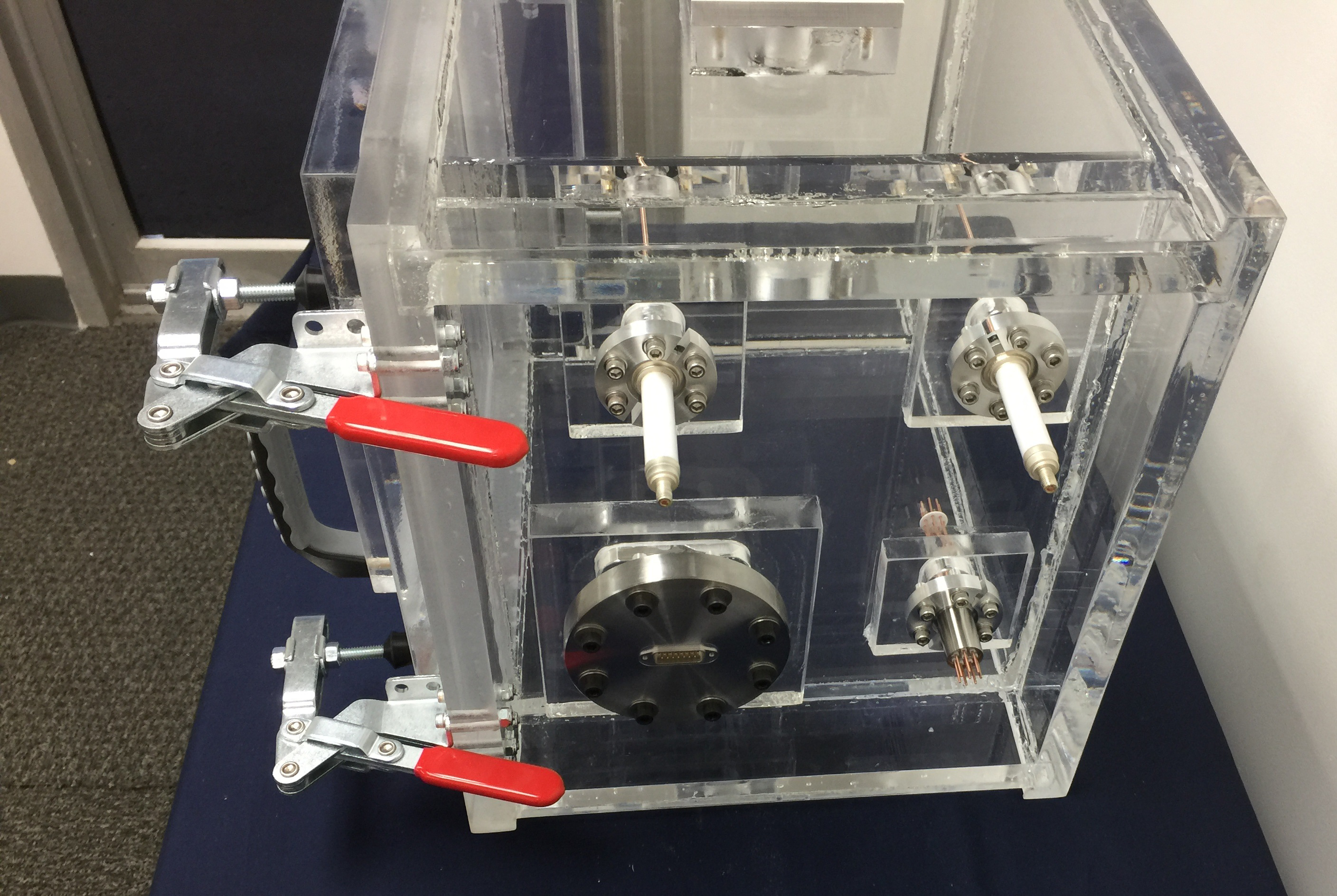
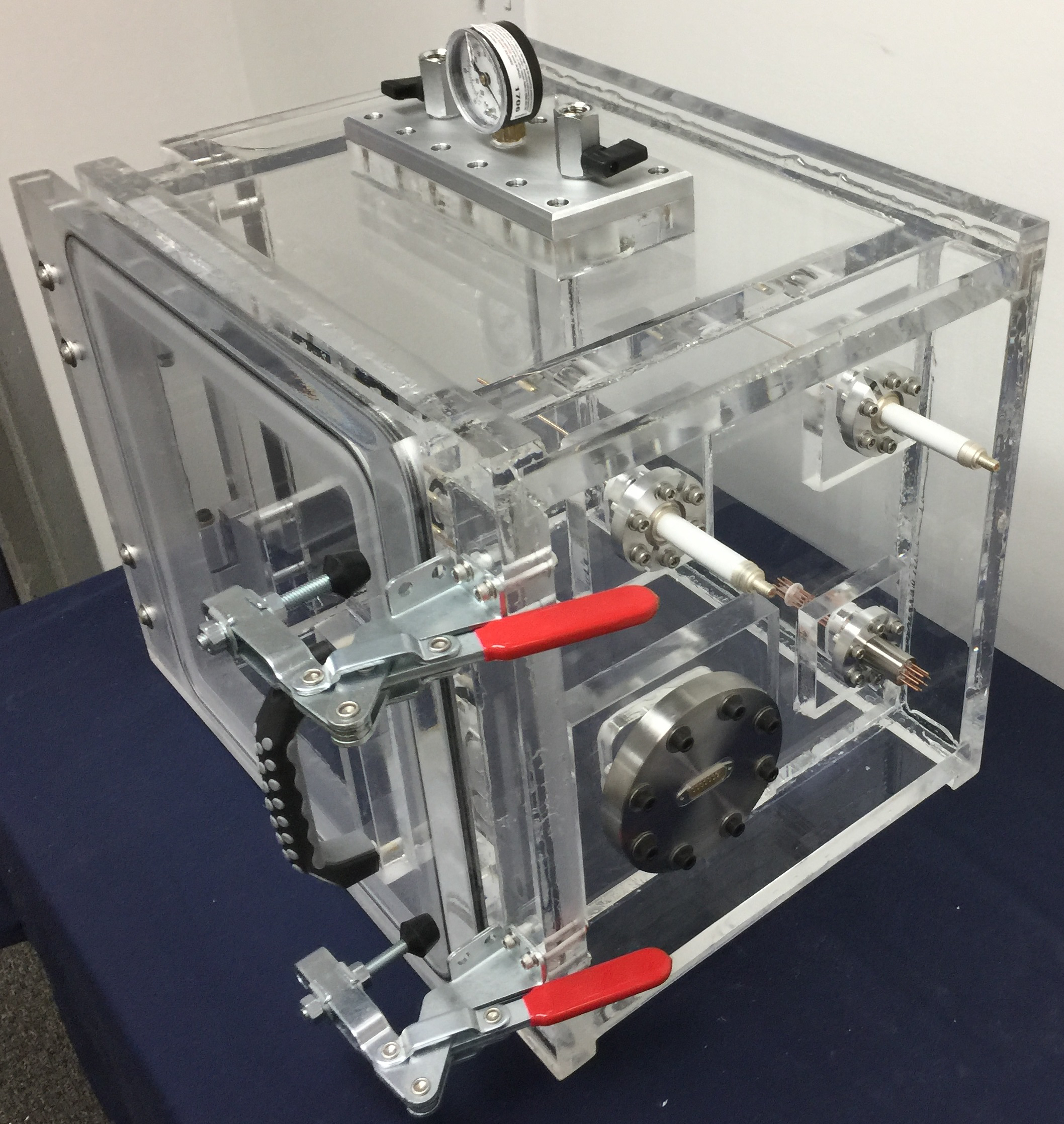
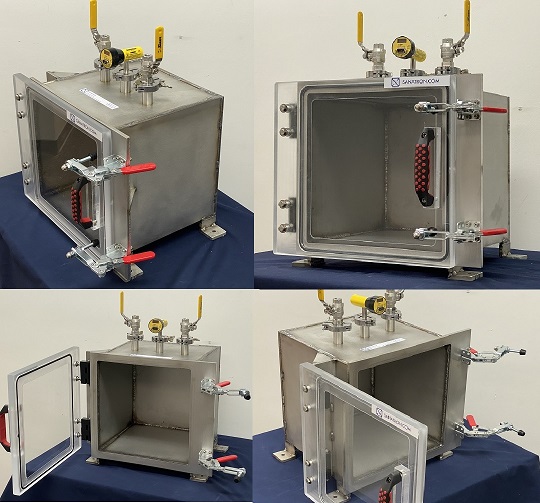
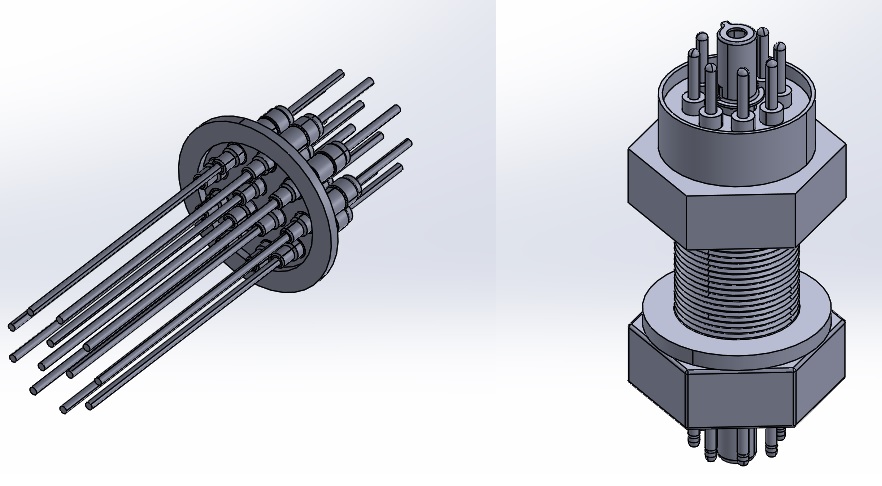
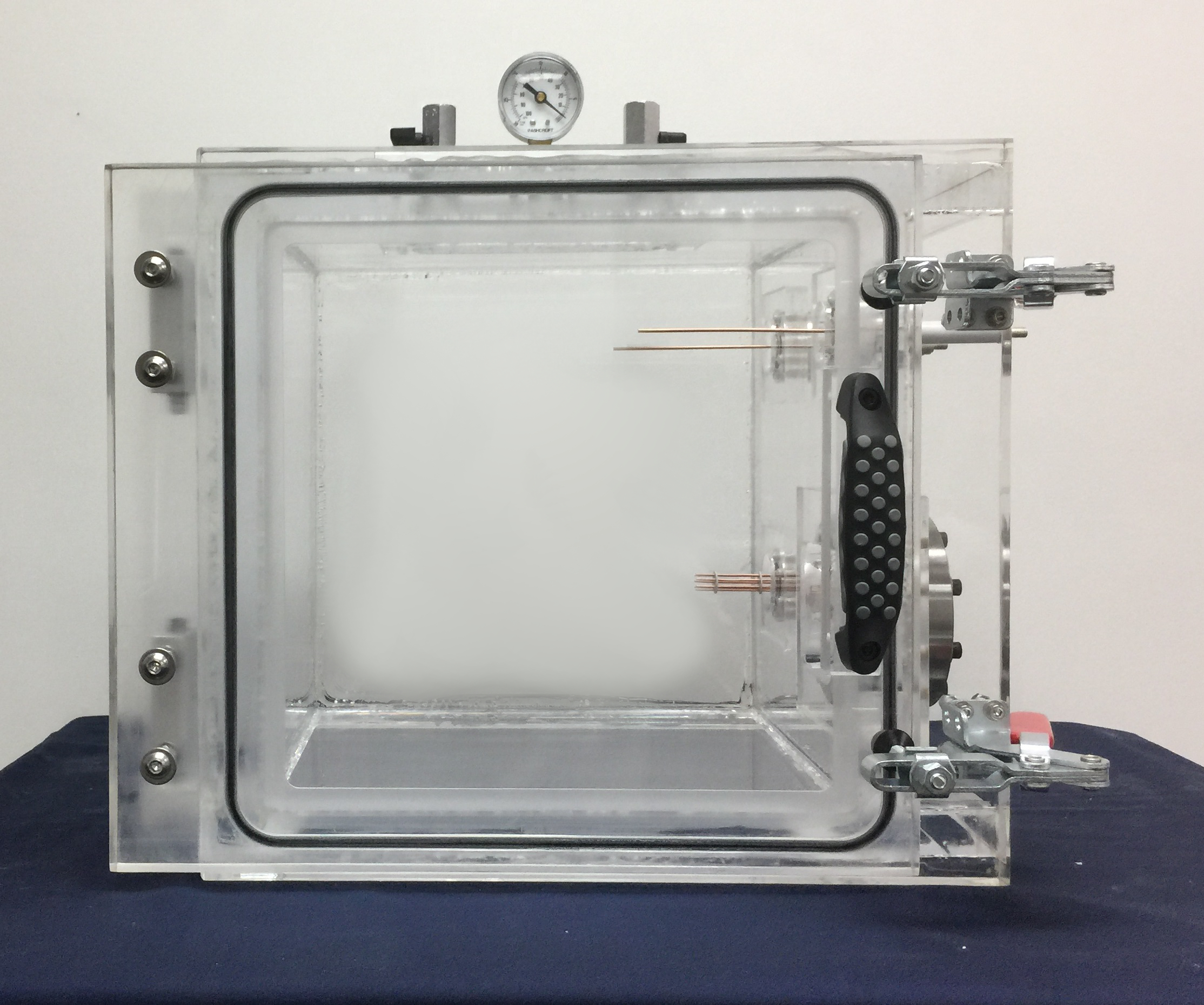
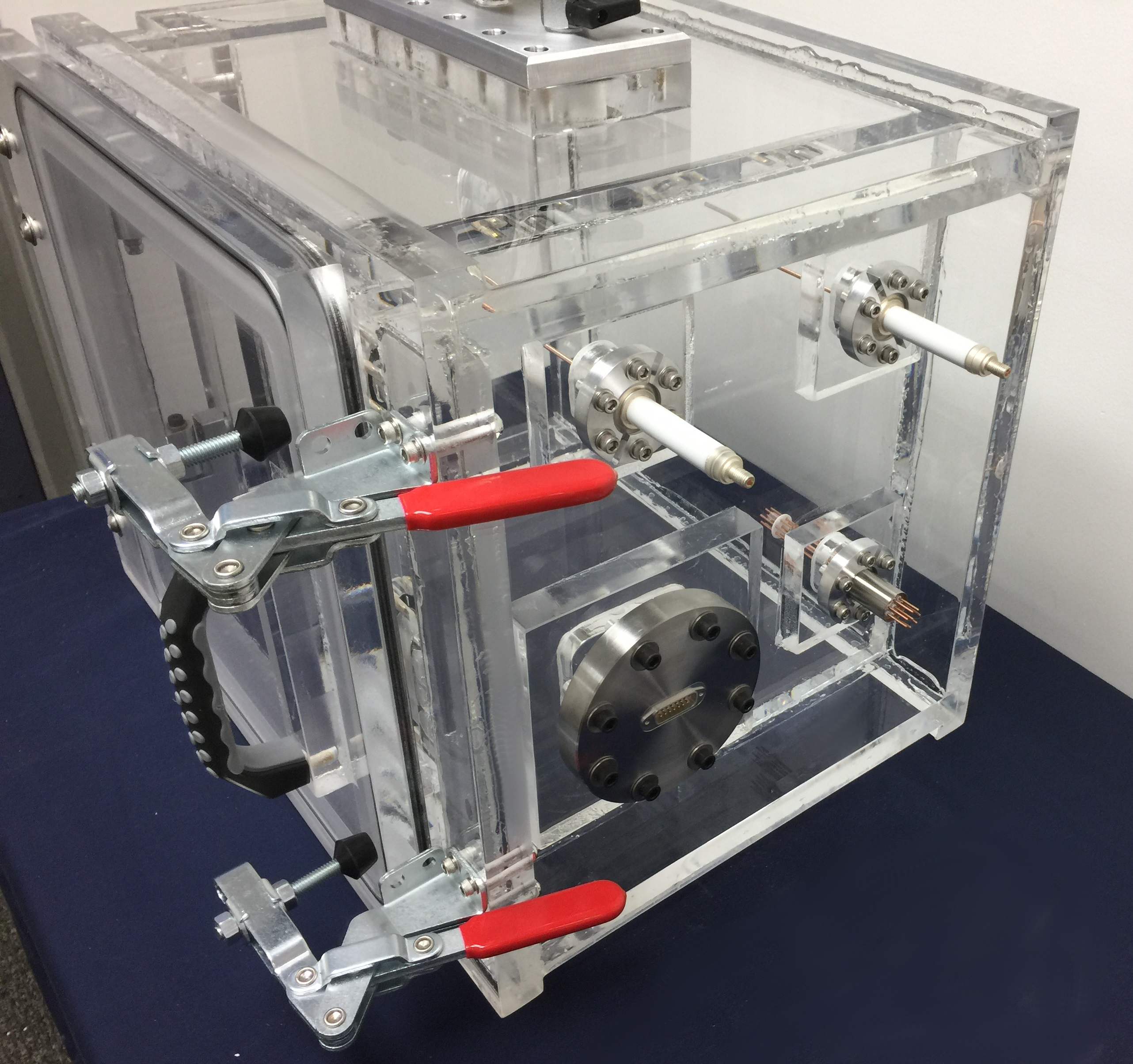
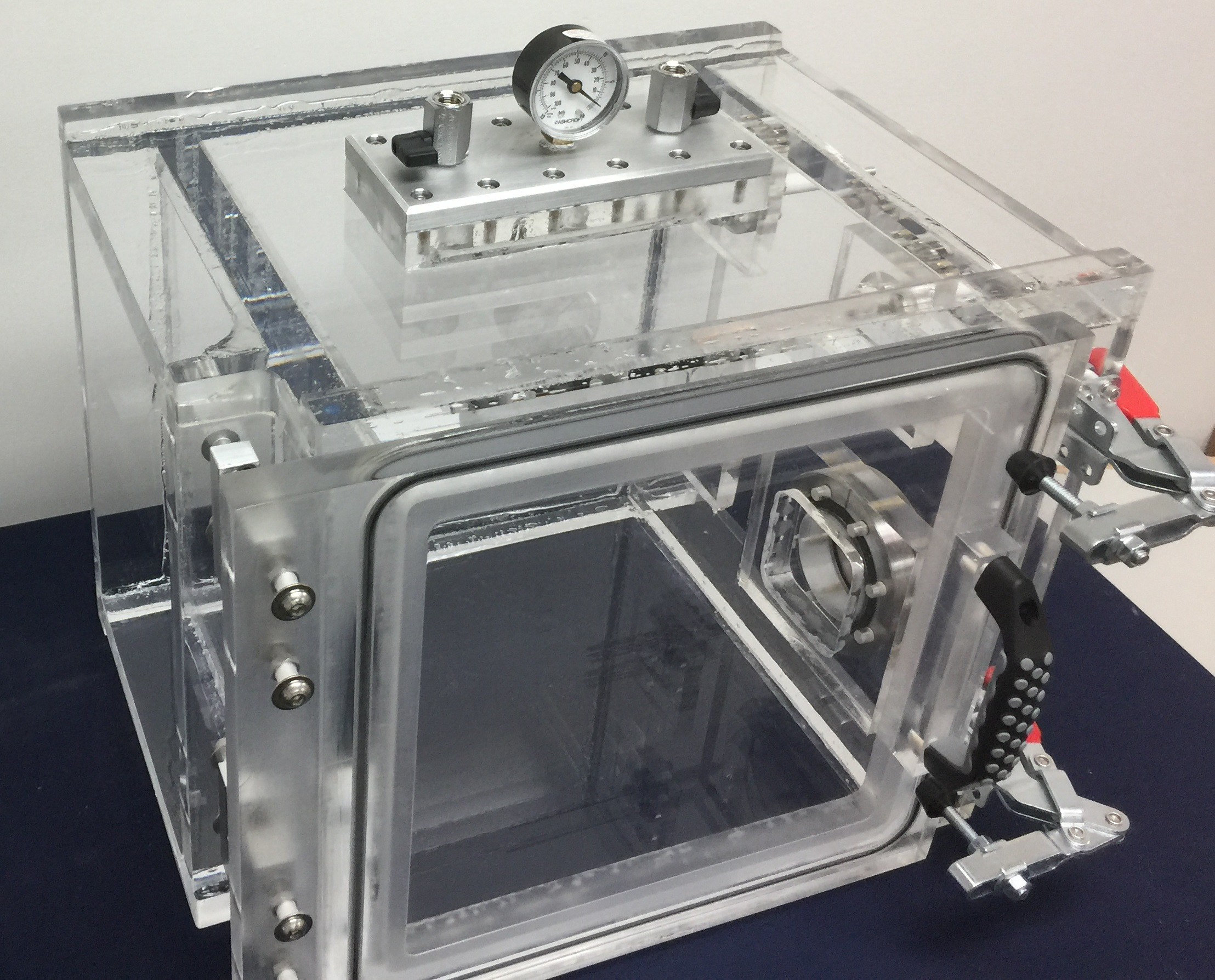
What you are seeing here is our crystal clear acrylic vacuum chamber, hinged side door with clamps. In addition, our client has asked us to add 1. A quantity of two high power feedthroughs on the top right wall, 2. An 8-pin power connector, and 3. a multi-pin feed through. These vacuum feedthroughs enable the routing of electrical power and signals from the outside of the chamber into the inside of the chamber without disrupting the vacuum.

The Feedthroughs are fully fastened to the wall and hermetically sealed by an O-Ring or Vacuum epoxy. The advantage is that the electronics can be connected and a vacuum can be pulled without leakage.

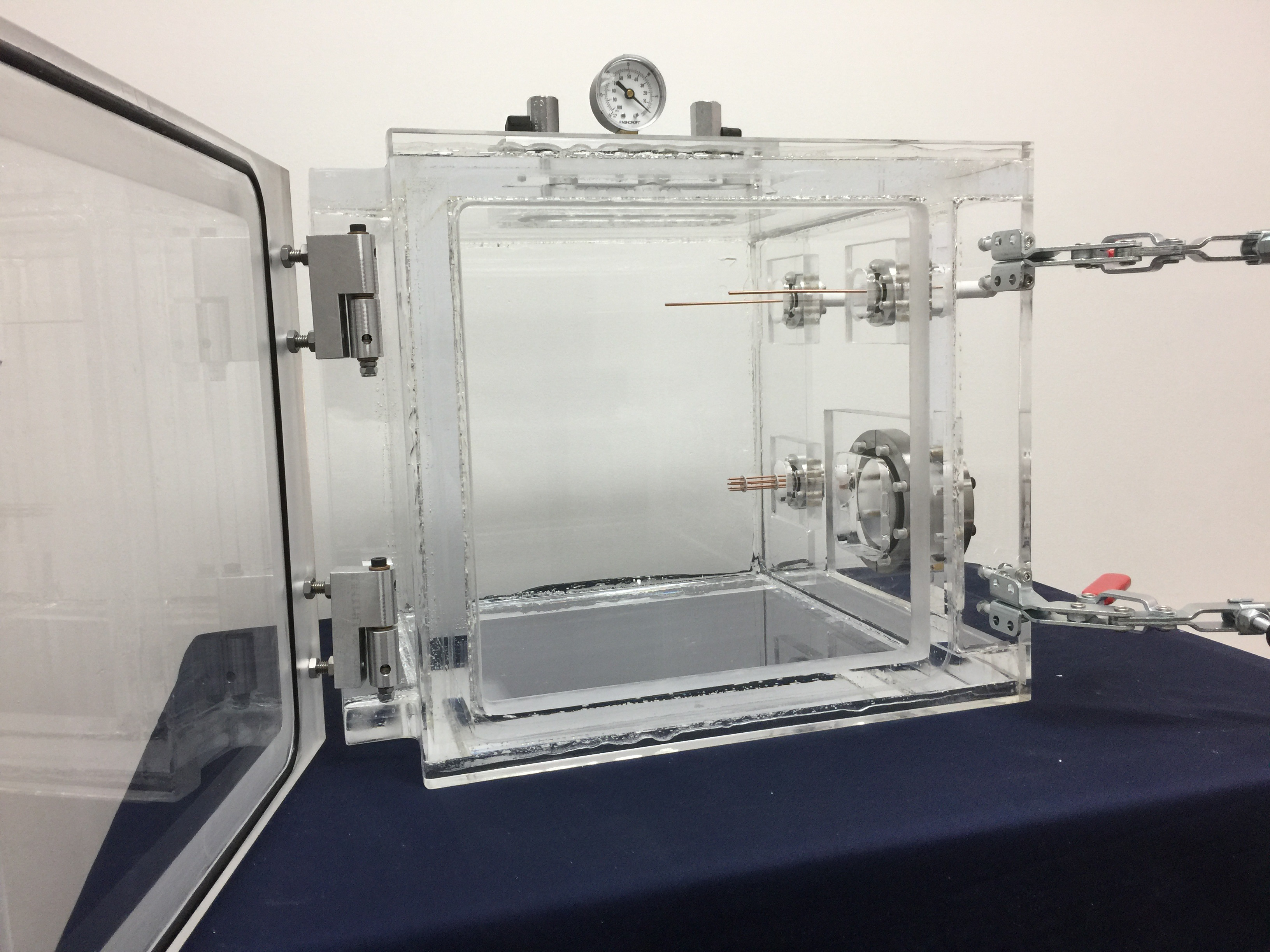
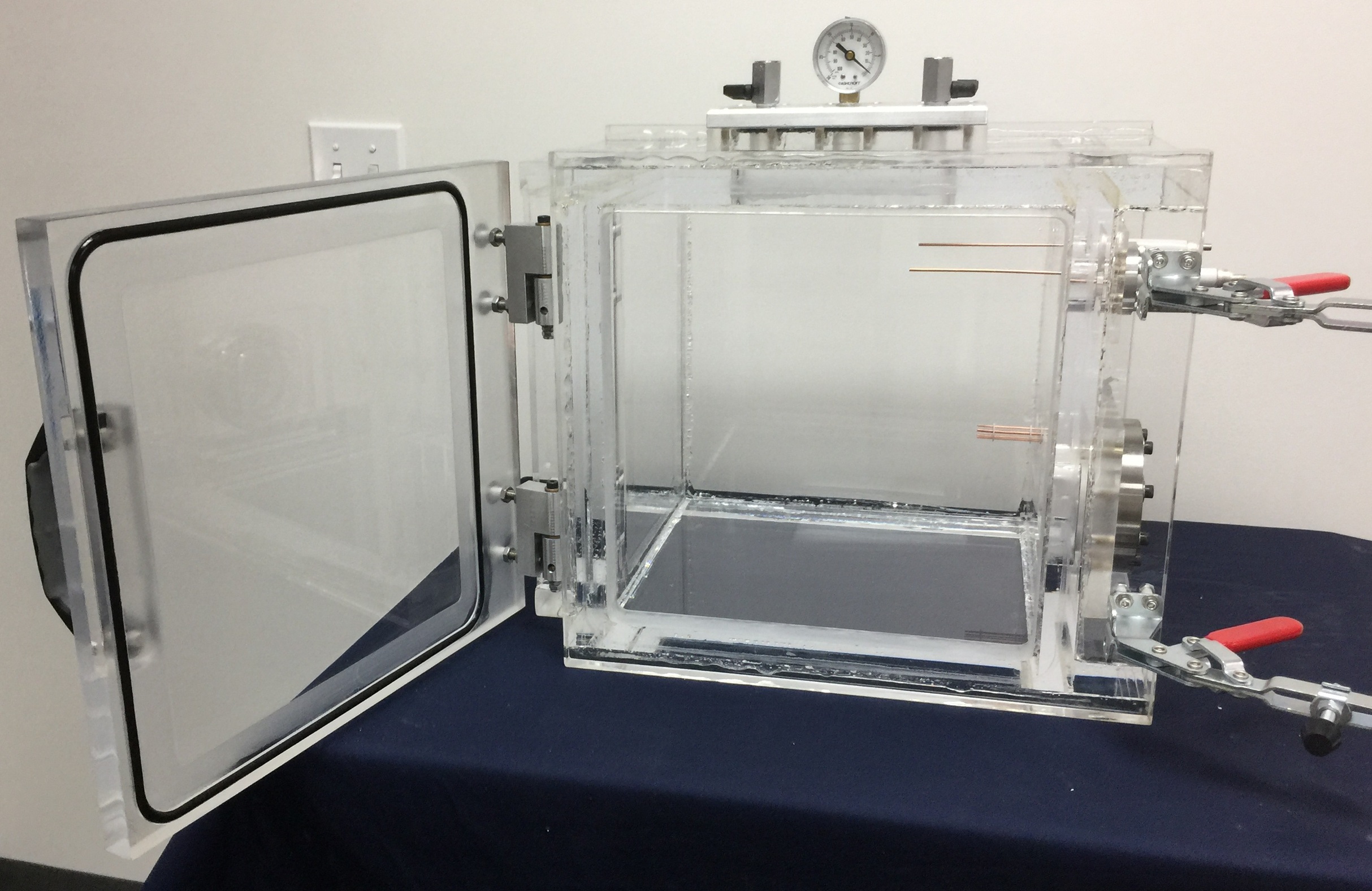
If we open the door, we can see the power cables perturbing into the inside of the chamber. Here, our client is able to connect these wires to their electrical device, close the door, and pull a vacuum. Because the walls are made of cast transparent acrylic, the electrical components inside the chamber fully visible during the test.
You may be interested in some of our other items

Our clients prefer to work with us because we are Experts in Custom Fabrication (especially Polymer Fabrication). You should check out some of our other items we carry; click on the links below.

Altitude Simulation Systems
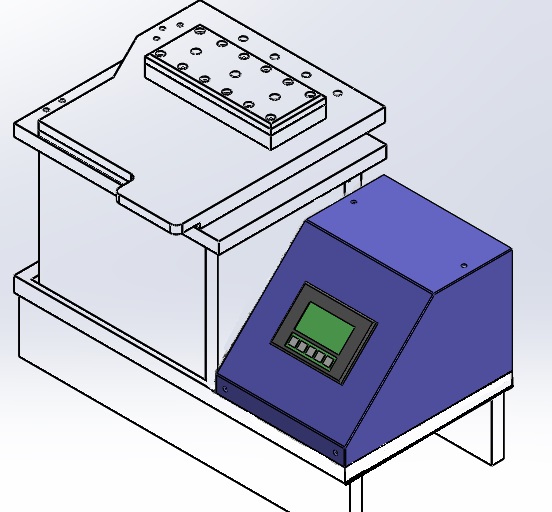
Altitude simulation systems are devices that simulate a certain altitude equivalent by controlling the vacuum inside a vacuum chamber. Altitude is a function of absolute pressure, therefore if a certain pressure is accomplished inside a vacuum chamber, a specific altitude can be simulated from the set pressure. Altitude simulation systems can be configured to not only hold a certain pressure, a complete pressure vs time profile can be programmed to be run. Furthermore, pressure vs time recipes can be loaded and run based on test requirements.
Thermocouple Vacuum Feedthroughs
Thermocouple Vacuum Feedthrough are air-tight components that enable the measurement of temperature inside the vacuum chamber during vacuum operations. If you have to run thermocouple wires into the vacuum chamber in order to measure temperature of a specimen during vacuum operation, a thermocouple vacuum feedthrough will enable you to do that.
Our Work: Vacuum Storage of Chemicals that interact with Stainless Steel
There are countless chemicals and metals that interact with Steel or Stainless Steel. According to our investigation, Gallium, Cadmium, Beryllium, and Zinc are some examples of materials which will interact with Steel or Stainless Steel during vacuum Storage.
Related Articles: Vacuum Levels of Acrylic Vacuum Chambers
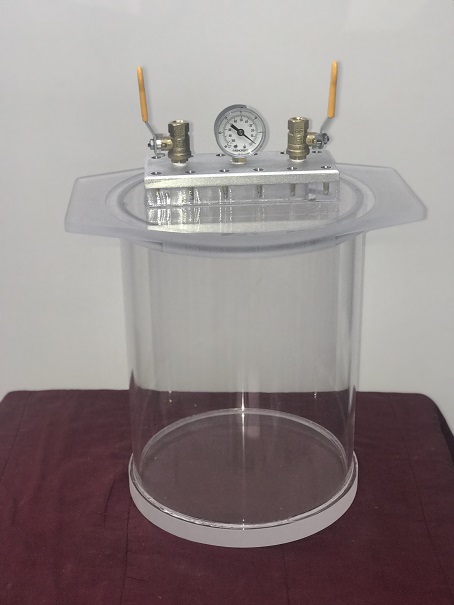
In this article we will discuss the vacuum levels of an acrylic vacuum chamber. This article also covers the leak rate or the leak tightness of the acrylic chamber. Additionally, we are going to recommend a rule of thumb used for vacuum pump selection based on the size of the vacuum chamber.