What is the ASTM F2095 Protocol?
ASTM F2095 is the standard that brings pressure decay leak testing to flexible packaging. While its rigid-vessel counterpart covers parts that keep their shape under pressure, F2095 covers leaks in flexible pouches and foil-sealed trays made of nonporous film, foil, or laminate. The word nonporous matters: the wall material must not be designed to transmit gas through its own matrix, and the specimen may be tested empty or already filled with product, as long as the seals and surfaces never touch water, oil, or another liquid during the test. The method detects leak paths at rates of 1×10⁻⁴ sccs (standard cubic centimeters per second) and larger, with the practical ceiling of that sensitivity depending on the internal volume of the package under test. Because gas must be introduced into the package through a leak-tight entry point to pressurize it from the inside, the test is destructive by definition: once you have penetrated the package to inflate it, that unit is no longer a shippable unit. The standard offers two variations: Test Method A, in which the package inflates freely, and Test Method B, in which rigid restraining plates surround the specimen to hold its volume in check and steady it while it is pressurized.
If your quality program needs an instrument-grade, numerical integrity check on flexible pouches and trays instead of a visual bubble call, ASTM F2095 is the accepted reference for exactly that. Mastering its parameters (test pressure, fill, settle, and test timing, decay limits, and volume management) is what separates a defensible integrity program from a guessing game. Secure the official documentation today and test with full confidence!
Purchase your copy of the ASTM F2095 Testing Protocol now and elevate your testing standards!
What are the Advantages of the ASTM F2095 Leak Testing Method?
The headline advantage is objectivity. There is no operator leaning over a chamber window judging whether a faint bubble trail counts; the result is a calibrated instrument reading that can be logged, trended, audited, and compared across shifts and suppliers. The method is fast and dry: no immersion fluid, no wet specimen, and packages can even be tested while already filled with product, so the unit under test matches what the customer will actually receive. The standard also hands you a complete design recipe for the test itself, including how test pressure, test time, and internal volume interact, so sensitivity becomes an engineered outcome rather than luck. And because sensitivity ultimately improves with longer measurement windows and finer pressure resolution, a disciplined F2095 installation can resolve leaks far finer than any visual technique. It is also the flexible-package counterpart recognized alongside medical packaging requirements such as ANSI/AAMI/ISO 11607, giving medical and consumer-product packagers a standard route to quantify what a bubble test can only indicate.
What are the Shortcomings of the ASTM F2095 Leak Testing Method?
The most important limitation is built into the method's design: it is destructive. You must puncture (or otherwise penetrate) the package to pressurize it, so the tested unit is consumed, and the penetration itself becomes a second potential leak path that must be carefully validated away. Sensitivity, while far beyond visual bubble testing, is also physically capped: as package volume grows, the same leak produces a smaller pressure signal, and F2095's benchmark sensitivity of roughly 1×10⁻⁴ sccs is coarse next to vacuum decay or tracer gas methods. Flexible films are elastic, and a pouch that keeps stretching under test pressure keeps changing volume, which means readings cannot be trusted until stabilization, a wait that can be painful on a production line. Gas diffusion through the packaging film itself, temperature drift, and instrument electronic stability all inject error at the fine end of the scale, and long test times amplify these effects. The restraining plates that make Method B precise can also physically block a wall pinhole and mask a real leak unless the plate faces are porous, scored, or screened, and a pressurized pouch braced against rigid plates exerts very large forces on the fixture, so only qualified, properly shielded fixtures should be used. Finally, unlike the visual methods, F2095 tells you only that a leak exists and how big it is. It will not tell you where the leak is; locating the defect requires going back to a bubble or tracer-gas technique.
Conclusion: The Role of ASTM F2095 in Leak Testing
ASTM F2095 closes a gap the other standards on this site leave open: it turns leak testing of flexible, nonporous packaging into a quantitative, instrument-based measurement. The visual bubble family (ASTM D3078, ASTM F2096, ASTM D4991) shows you a leak; ASTM D6653 proves a package survives altitude pressure changes; vacuum decay per ASTM F2338 screens sealed specimens without ever touching their interior. F2095 is the method that actually drives gas into a pouch or foil-sealed tray and measures how fast it escapes, complete with rules for sampling, conditioning, stabilization, and reporting that make the number defensible. In practice, a strong integrity program pairs a screening method with a quantifying one, and for flexible barrier packaging, F2095 is the quantifier.
A quality program rarely needs just one technique. Bubble emission tests screen cheaply and fast, vacuum decay screens sealed specimens without penetration, and pressure decay testing on flexible packages closes the loop with traceable, instrument-grade results. Choosing each method for its proper application is how medical device, food, electronics, and consumer-goods teams keep defective units out of the field and evidence in their files.
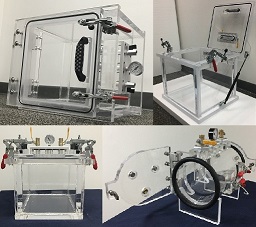
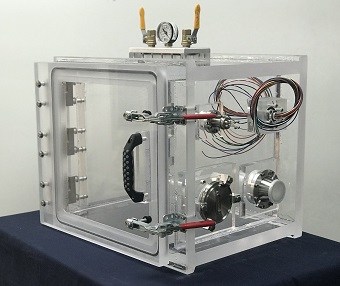
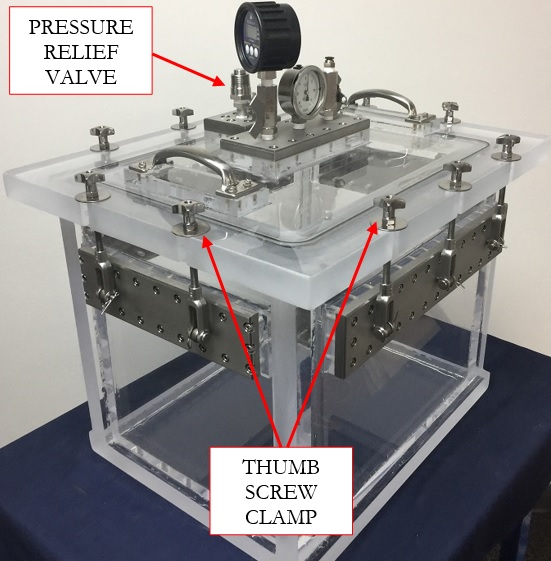
Ensure unmatched package integrity with the Sanatron Pressure Decay Leak Testing Systems, the industry-leading solution for fast, accurate, and reliable leak detection. Designed for rigorous protocol compliance, these systems help you identify and quantify leaks with precision, prevent contamination, and maintain top-tier quality control. CONTACT US today
We have more resources with regards to leak testing that we invite you to read.
Vacuum Bubble Leak Test, A Comprehensive GuideBubble Leak Testing using an acrylic vacuum chamber
See our Vacuum Bubble Emission ASTM 3078 Leak Testing Systems
See our Altitude Package ASTM D6653 Leak Testing Systems