Vibration Table Installable Vacuum Chamber

Vibration Table Installable Vacuum Chamber
The ASTM D3580 as well as the ASTM D4728 use a vibration testing method to quality test packages and shipping containers that will be subjected to vibration due to transport. But what happens if you have several ASTM testing protocols to complete and would like to find a way to consolidate your testing methods so that you can do two or more ASTM testing protocols at once in order to save time, money, and resources; is this something that can be done?

Of course it is. Our customer combined the ASTM D3580 or the ASTM D4728 Testing Method with the ASTM D6653 Altitude Testing Method. This was done by placing a vacuum chamber onto a vibration table. As the Vibration table is running it’s protocol, the Vacuum Pump and Controller are running the ASTM D6653. This means that two package testing methods are done simultaneously.

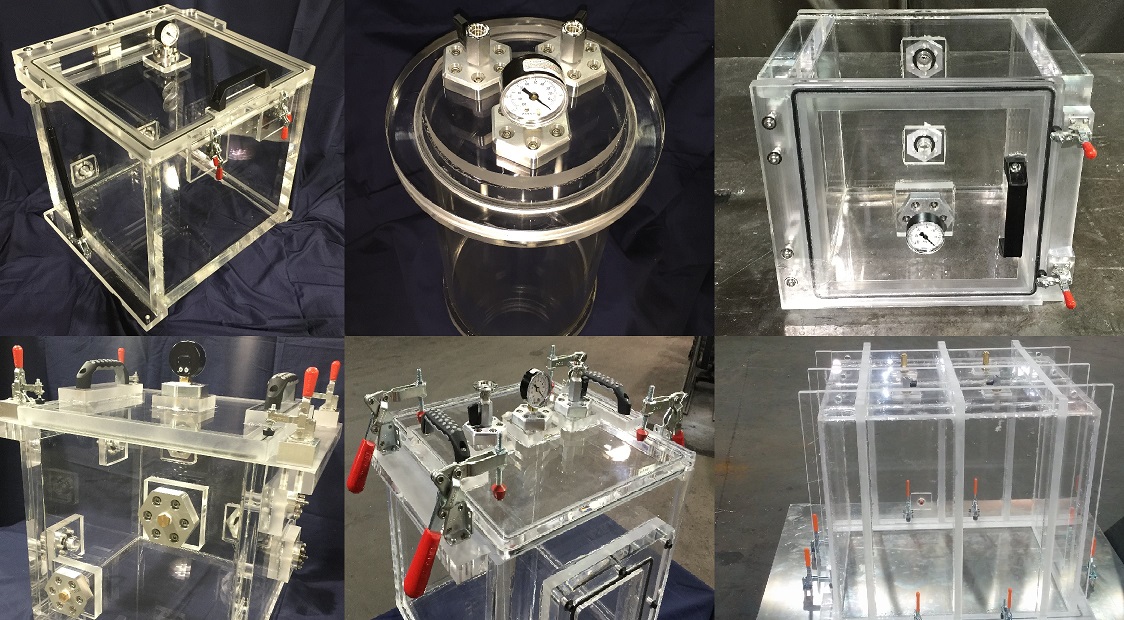
You are looking at a front loading vacuum chamber made from acrylic. The internal dimensions are 18 inch Wide, 18 inch Deep, and 22 inch High. The vacuum chamber also has Through holes on the bottom of wall outside lip. This will allow for the vacuum chamber to be connected to the vibration table by running four bolts and tightening them fitting the chamber into place. The vacuum chamber also has two door clamps, one lid handle, and four hinges. There is also a 2 inch diameter hole on the top center wall allowing for vacuum components to be connected to it. If you are looking for a vacuum chamber that is intended to be used for a specific custom application, contact us to see how we can help make that happen.

Some of our Popular Items

We make Robustly Designed and Quality Engineered Systems. What are you building? Take a look at the links below and discover some of the cool things we make.
Vacuum Decay Leak Testing Systems
Vacuum Decay Leak Testing Systems are Instruments that detect and quantify a leak by measuring the drop in vacuum (pressure) inside the specimen. During a vacuum decay leak test, the specimen is placed into a vacuum chamber, the vacuum is pulled to a specified setpoint, and the drop in vacuum is monitored and recorded over time. If a leak in the specimen exists, the air will travel from a higher pressure (inside the specimen) to a lower pressure (vacuum chamber). As a results of the additional air, the vacuum levels will drop whereas a leak can be detected and quantified.
Micro-D Vacuum Feedthroughs
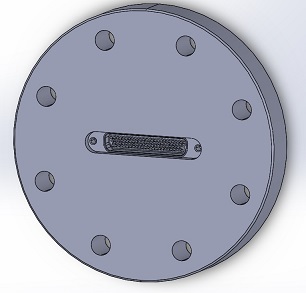
Micro D Vacuum Feedthroughs are Micro D connectors rated for vacuum and are generally installed on the vacuum chamber wall. You can then connect from the outside to the inside of your chamber.
Our Work: High Altitude Vacuum Testing of Electrical Connectors and Components
This was an interesting project where one of our customers needed to test wires up to 44 inches long within a high altitude simulation environment. In addition to testing wires, several other electric connectors required altitude testing as well. The altitude requirements were 100,000 feet (30.510 km) which corresponds to 8.36 Torr - a piece of cake when it comes to the vacuum requirements of our chambers.
Related Articles: Vacuum Levels of Acrylic Vacuum Chambers
In this article we will discuss the vacuum levels of an acrylic vacuum chamber. This article also covers the leak rate or the leak tightness of the acrylic chamber. Additionally, we are going to recommend a rule of thumb used for vacuum pump selection based on the size of the vacuum chamber.