Turnkey Portable Stainless Steel Vacuum Chamber with Dry Scroll Pump
Turnkey Portable Stainless Steel Vacuum Chamber with Dry Scroll Pump
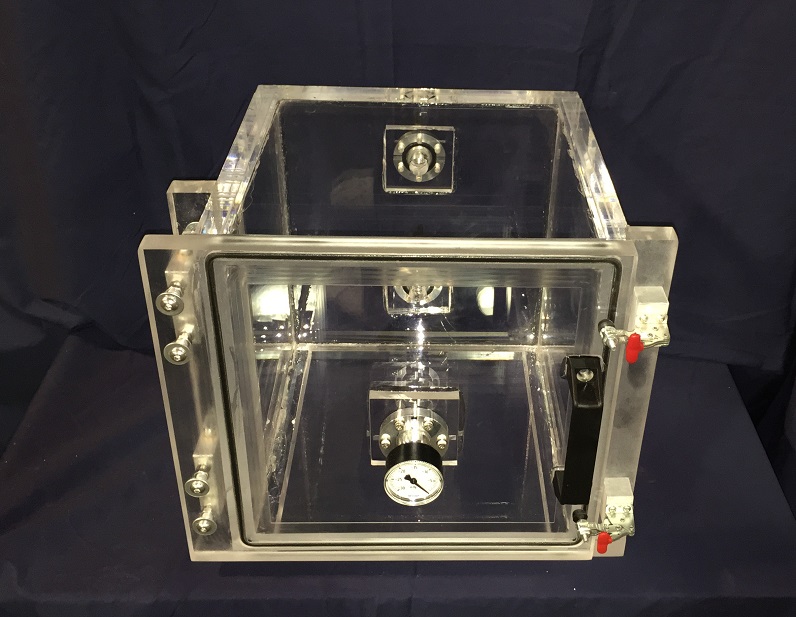
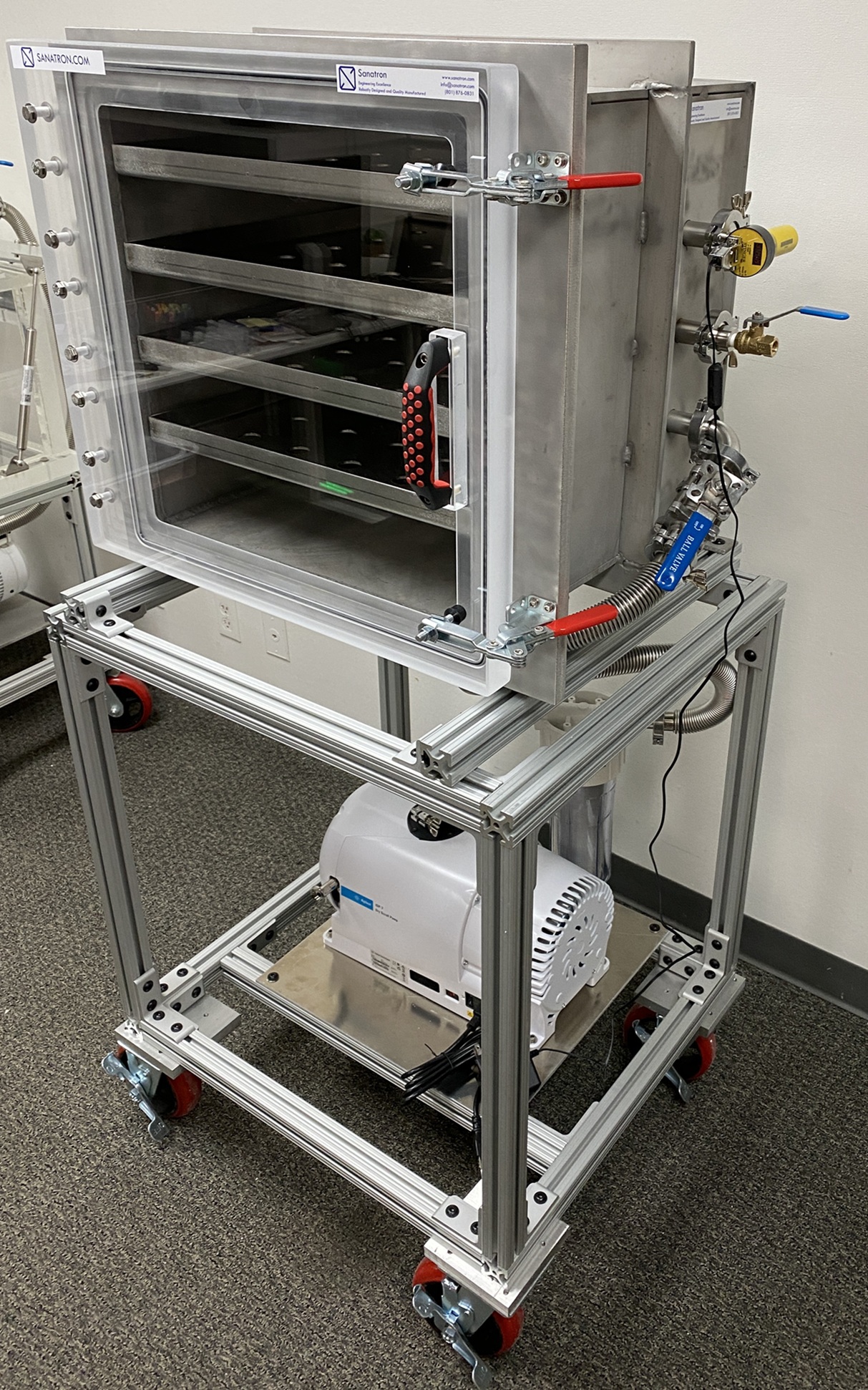
The Sanatron Portable Stainless Steel Vacuum Chamber with Dry Scroll Pump is robustly designed and quality built for laboratories and production environments where performance, durability, and portability are a absolute must. Designed as a front-loading 20-inch cube, this vacuum system features a front loading, fully transparent, Acrylic Door that provides clear visibility of internal processes while maintaining an almost perfect vacuum seal. Equipped with removable stainless steel perforated shelves that ensure uniform airflow, making it ideal for controlled vacuum drying, degassing, and conditioning operations. The table cart which is constructed with a robust 8020 aluminum frame, the entire system rests on lockable swivel casters for effortless mobility, transforming it into a truly portable vacuum platform that can be positioned anywhere in your lab or cleanroom with minimal effort.

This complete turnkey vacuum system integrates a high-performance dry scroll pump paired with a Visitrap inline filter and a NW25 Vacuum valve assembly, ensuring oil-free, contamination-free operation suitable for biotech research, pharmaceutical manufacturing, and advanced medical technology applications. This Particular Dry Scroll Vacuum Pump (Supplied by Agilent) delivers high pumping efficiency without introducing hydrocarbons, making it an environmentally responsible and maintenance-friendly choice. Every component, from the welded stainless chamber to the ergonomic layout, reflects our dedication to quality and functionality. Built to perform under demanding schedules, this vacuum system represents the harmony of clean design, quiet operation, and scientific reliability, suitable for research institutions and production engineers who demand more than just function—they demand dependability.

If you are looking for a turn-key vacuum system with the reliability and craftsmanship trusted across the biotech and pharmaceutical industries, contact Sanatron today. Our engineering team can customize this system to your precise specifications. Whether that means adjusting dimensions, adding sensors, integrating automation controls, adding vacuum feedthroughs, or other complex customizations. Contact us today!

Similar Items

Our clients prefer to work with us because we are Experts in Custom Fabrication (especially Polymer Fabrication). What are you building? Take a look at the links below and discover some of the cool things we make.

Vacuum Oven Systems
Vacuum Ovens are vacuum chambers and ovens combined in one system. Vacuum ovens are necessary during processes which require the specimen to be subjected to a hypobaric and hyperthermal environment. Our Vacuum Oven Systems enable to you run a complete vacuum vs time and temperature vs time profile. We also carry portable vacuum oven systems and custom vacuum oven systems.
USB Vacuum Feedthroughs
USB Vacuum Feedthroughs are 2.0 USB ports which enable you to run a USB signal into the vacuum chamber during vacuum and pump-down operations. You have several options on what type and size of USB ports you are looking to add to a vacuum chamber.
Our Work: Vacuum Testing of Lithium Ion Batteries, Thin Film, Fuel Cells, Supercapacitors, and Nano materials
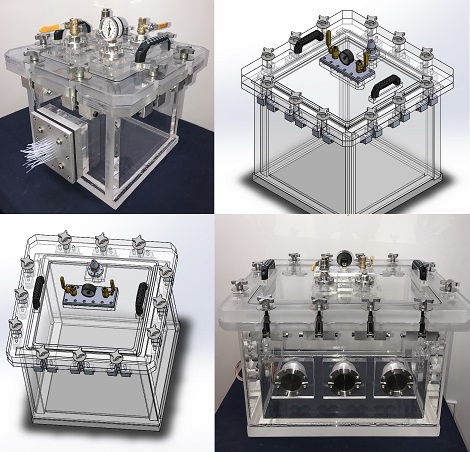
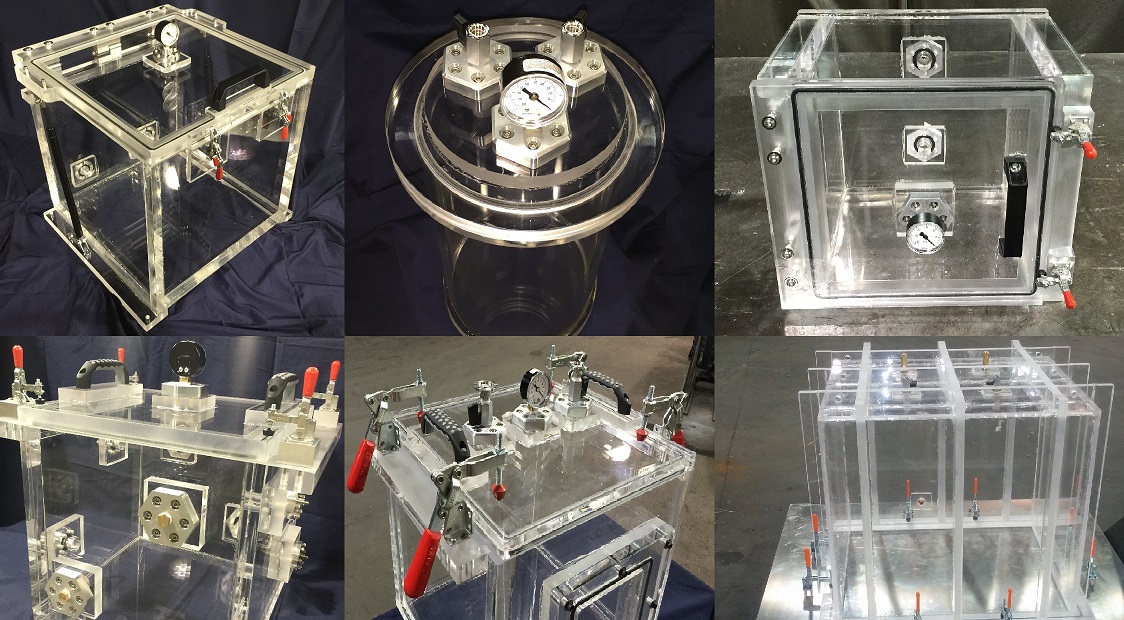
This vacuum chamber is a modification to our basic acrylic vacuum chamber 12 inch, removable lid model; except that our customer requested additional ports and electrical feed-through for testing of electrical equipment under vacuum. You know, I wish we would have asked them for more details on what they were doing with this chamber; their short and concise answer was that they were using our chamber to perform scientific work on the subjects of: lithium ion batteries, thin films, fuel cells, super-capacitors, and nano-materials testing in a vacuum environment.
Related Articles: Anatomy of the Pressure Decay, Vacuum Decay, and Force Decay Curve
How do you know that you have a good part during your leak test? In order to understand your leak test, you must first understand the Test Decay Curve and what it tells you about your test specimen. There is a certain way that a test specimen behaves during the leak test.