ASTM F2338 Protocol Explained, Nondestructive Vacuum Decay Leak Testing for Packages

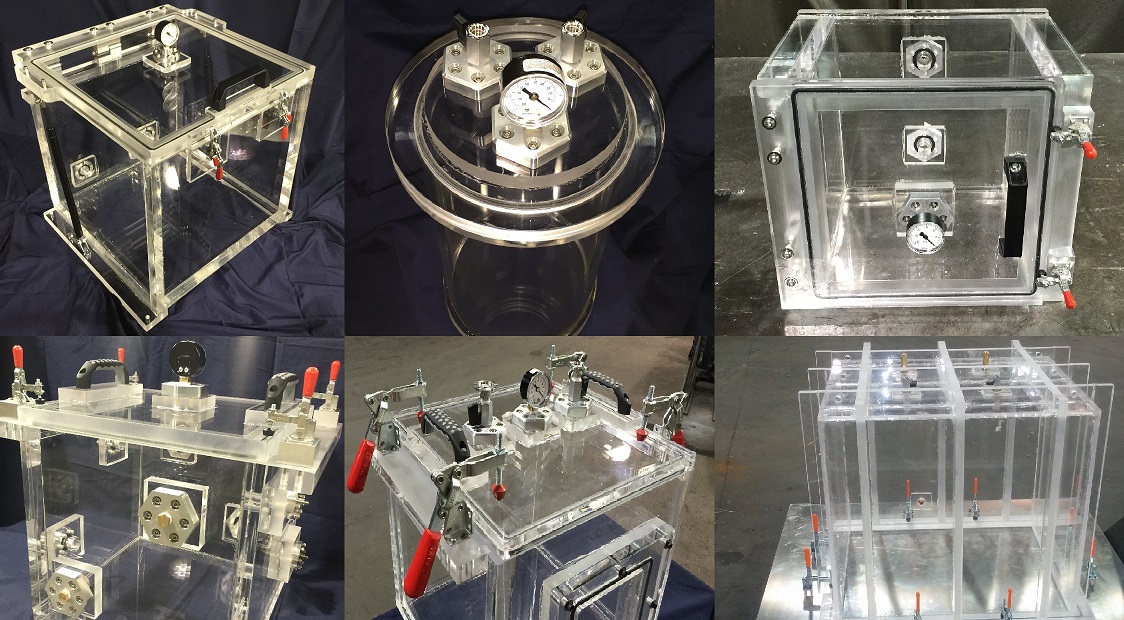
ASTM F2338 is the recognized standard for finding leaks in packages without damaging them, using a technique called vacuum decay. It was written with thermoformed trays and cups in mind, both plain rigid and semi-rigid trays without lids, and trays or cups sealed shut with a porous barrier film. During the test, the package sits inside a chamber that is pulled down to a set vacuum (the standard's reference studies used a target around 4 x 10^4 Pa, or roughly 400 mbar). Once that vacuum is reached, the chamber is sealed off from the pump and a pressure transducer watches for any rise in chamber pressure. If the package has a hole, a crack, or a poorly bonded seal edge, gas from inside the package flows out through that defect and the chamber pressure climbs. That change in pressure is what the instrument detects.

Why does this matter? A pinhole in a medical device pouch or a drug blister can let oxygen, moisture, microbes, or particles reach the product inside. F2338 gives manufacturers a way to catch those defects quickly, without dyes, without tracer gasses, and without destroying the unit being tested, so the same method works just as well in a design lab as it does for 100% on-line screening or sampling checks on a production line.

If your quality program depends on proving package integrity with hard data instead of guesswork, a firm command of this vacuum decay protocol is the foundation. Don't leave defect detection to chance, secure the official documentation from ASTM and run your procedures with complete confidence.
Purchase your copy now!

The beauty of the F2338 method is how direct it is: create vacuum around the package, isolate the chamber, then measure how the vacuum holds up over time. Any pressure creep beyond the normal background drift of the system means gas is escaping through a leak path in the tray wall or at the lid-to-tray seal. For packages with a breathable (porous) lid, the porous surface itself must be physically masked or blocked during the test, often with a flexible bladder built into the chamber's upper tooling, otherwise gas would simply migrate through the breathable lid and drown out the signal. The standard is clear that this masking must be done in a way that is still nondestructive and noninvasive to the sample.

Getting Ready:
Power up and warm up the instrument per the manufacturer's instructions, and confirm both electrical supply and a dry, oil-free compressed air source are in spec. The pressure transducer, the vacuum source gauge, and the calibrated volumetric airflow meter must all be within their own calibration windows. Then choose the chamber size that matches the package, and adjust the fixture so the upper lid seals tightly against the lower tray nest. The lower tooling should hug the package closely while still allowing gas to flow freely around it, gaps that are too large dilute the signal and cost you sensitivity.

Parameter Setup and Qualification:
Every package/fixture combination needs its own critical parameters. These include the Reserve Vacuum (set roughly 10% deeper than the target), the Target/Test Vacuum, the Reference Vacuum floor that must not be crossed, the Reference Fill Time allowed to pull vacuum, an Equalization pause for pressure to settle, the Test Time measurement window, and the Reference Vacuum Decay Rate (dP/dt limit). These values are established by running a population of known-good, properly sealed control packages and recording their baseline decay behavior. Once set, you must qualify the method by proving it reliably rejects known-bad samples, and verify sensitivity by feeding a known airflow from a calibrated volumetric airflow meter into the chamber, the lowest flow that triggers a fail defines your sensitivity. This qualification and verification should be repeated frequently, ideally at the start of every shift.

Running the Test:
Place the finished package into the nest, mask any porous surface, close the chamber, and start the cycle. The chamber evacuates to the Target Vacuum, the vacuum source is automatically cut out of the loop, the chamber is left isolated, and the transducer measures both the vacuum level and its rate of change during the test window. A unit fails if vacuum is not reached within the allotted fill time, if the level sags below the Reference Vacuum during equalization or test, or if the decay rate outruns the reference limit. Every reject gets set aside for investigation, and each result is documented.

In the round-robin studies behind the standard, this approach consistently flagged holes of 100 µm in lidded trays, seal channel defects made with 125 µm wire, and badly incomplete bonds in both dot-matrix and continuous adhesive systems, with measured sensitivity on the order of 1 x 10^-2 Pa·m³/s. For open trays without lids, wall defects down to about 50 µm could be found. Many cycles finish in only a few seconds from the moment the chamber closes, which is what makes the method practical for full-population screening.

Shortcomings of this Testing Method

The most important limitation is built into the physics: with a porous-barrier lid, the lid itself is masked off, so a breathable film that is simply permeable (or defects hiding within the porous laminate away from the seal junction) cannot be judged by this method. You are testing the tray, the tray walls, and the lid-to-tray seal line, not the breathability of the lid material. A perfectly sealed package can still permit harmful gas transmission, and vacuum decay will not show that.

Sensitivity is also contextual, not absolute. It shifts with fixture fit, chamber void volume, line volume, transducer quality, and your chosen times and pressures, so results between two installations on the same package can differ. A leak path clogged by product residue, or a defect pinched shut by the test fixture itself, can hide a real leak and produce a false pass, one reason the standard's own study saw some 50 µm-hole trays pass until the holes were found to have become blocked. Background noise from residual gas in the chamber and lines, or from the package flexing and outgassing under vacuum, sets a floor on how small a leak you can resolve, and results remain a qualitative pass/fail verdict against control packages rather than a direct measurement of leak size.

Conclusion

ASTM F2338 occupies a specific and valuable niche: rapid, instrument-based proof that a tray, cup, or porous-lidded package is free of through-wall and seal-junction defects, achieved with nothing more than vacuum and a pressure reading. For medical device, pharmaceutical, and food packagers, it converts package integrity from an assumption into a documented, per-unit (or per-lot) record. Because it consumes no consumables, adds no dyes or tracer gasses to the product stream, and finishes in seconds, it scales from R&D seal development to full on-line screening without changing the fundamental physics.

Used together with the family of related standards on this site, the bubble-emission and internal-pressurization methods for gross-leak checks and the pressure decay standard for rigid vessels, F2338 rounds out a complete integrity-testing program. Teams that take the time to properly establish their critical parameters against good control samples, then re-verify with a calibrated airflow leak on a regular schedule, get repeatable accept/reject decisions they can defend to any auditor. Used with care and proper qualification, this standard raises the floor of quality assurance for every package that leaves your line.

Seal in confidence and protect what's inside your packages with ASTM F2338 capable testing solutions. CONTACT US today to learn how we can help you ensure the highest standards of safety and quality!

Some of our Popular Items

We are an Engineering Excellence Company. There is a tremendous amount of valuable resources and information regarding vacuum systems and vacuum technology; check them out by clicking on the links below.

Pressure Decay Leak Testing Systems
Pressure Decay Leak Testing Systems are instruments that detect and quantify a leak by measuring the pressure drop over specified amount of time. Any specimen that is inflated will stay inflated if it is leak tight. On the other hand, of a leak exists in the inflated specimen, air will escape through the orifice and decrease the pressure inside the specimen. The higher the pressure drop, the high the leak.
BNC Vacuum Feedthroughs
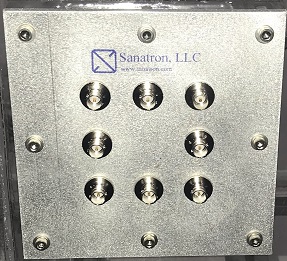
Coaxial Vacuum Feedthroughs are vacuum rated BNC connectors that enable you to run BNC from outside of vacuum chamber towards inside of the vacuum chamber without disturbing the vacuum. Triaxial Vacuum Feedthroughs, just like coax vacuum feedthroughs, will enable you to run Triax Connections from outside towards the inside of the vacuum chamber without disturbing the vacuum levels inside the vacuum chamber.
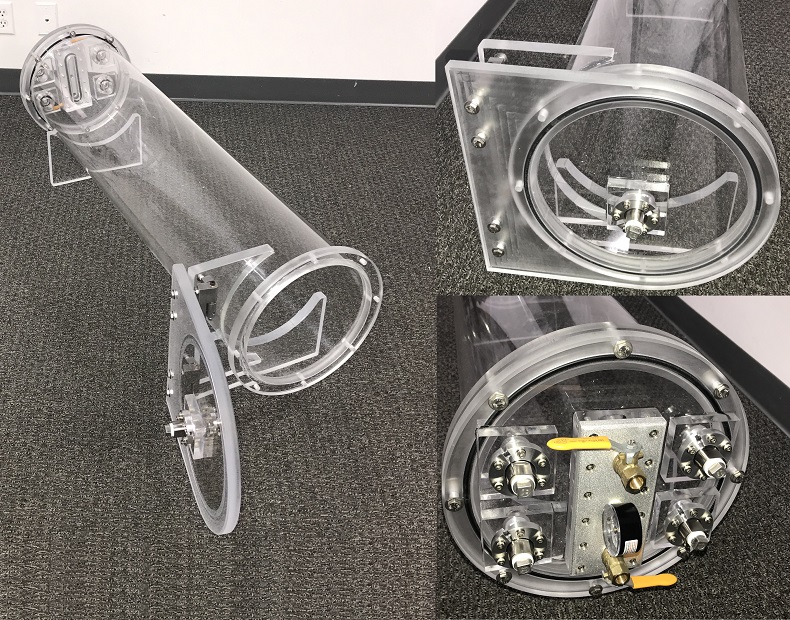
Our Work: Research, Development, and Testing of Weather Balloons inside a Clear Vacuum Chamber
A wonderful company (more like one of the best companies in the world) which is currently involved with the research, development, and testing of high-altitude weather balloons, had a need for a vacuum chamber capable of achieving about 100 micro Torr (Micron) of ultimate Pressure for their testing environment. Fortunately, acrylic vacuum chambers are the perfect choice when it comes to Low, Rough, and Medium Vacuum.
Related Articles: Selecting a Proper Vacuum Pump for your Acrylic Vacuum Chamber
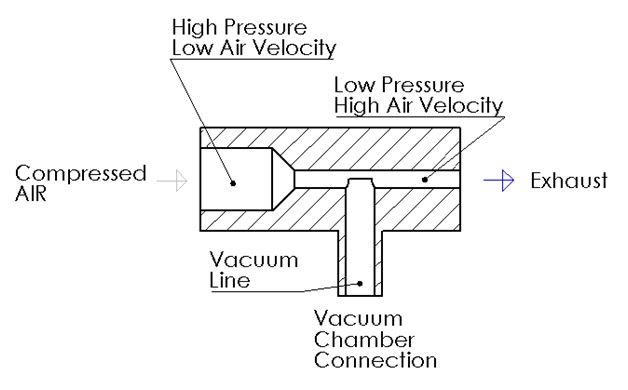
In this article we will talk about Vacuum Pumps - but also about other equipment which is used to produce vacuum inside a closed system or chamber. We will talk about the workings of a vacuum pump, vacuum generation, pump down, pump horsepower. This article is intended to provide you a practical guide which should help you select the appropriate vacuum pump for your system.