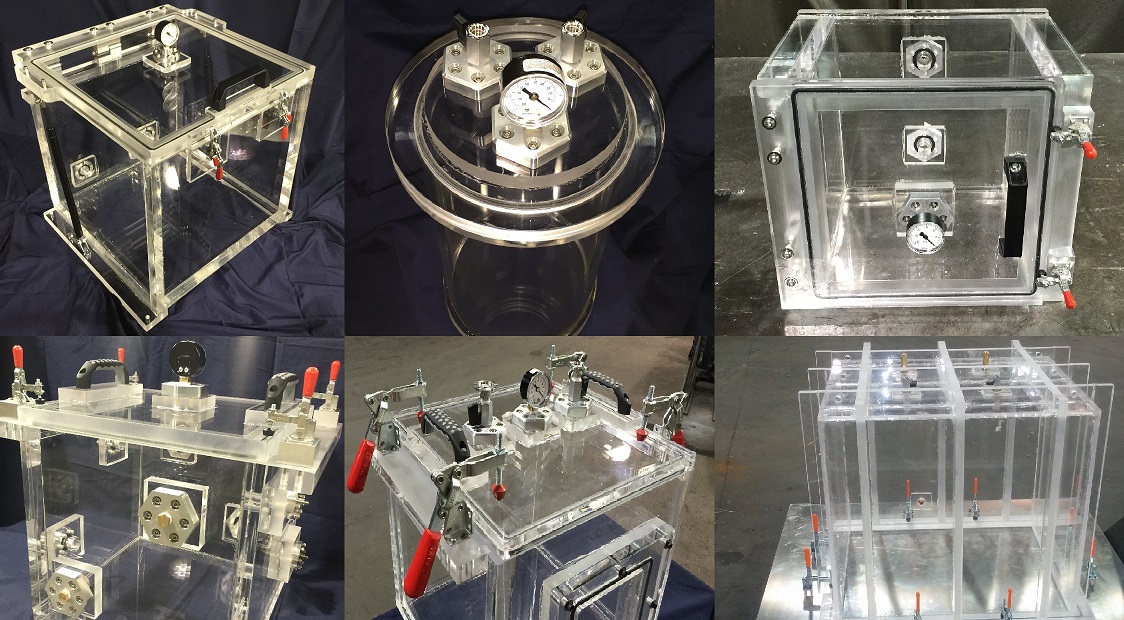
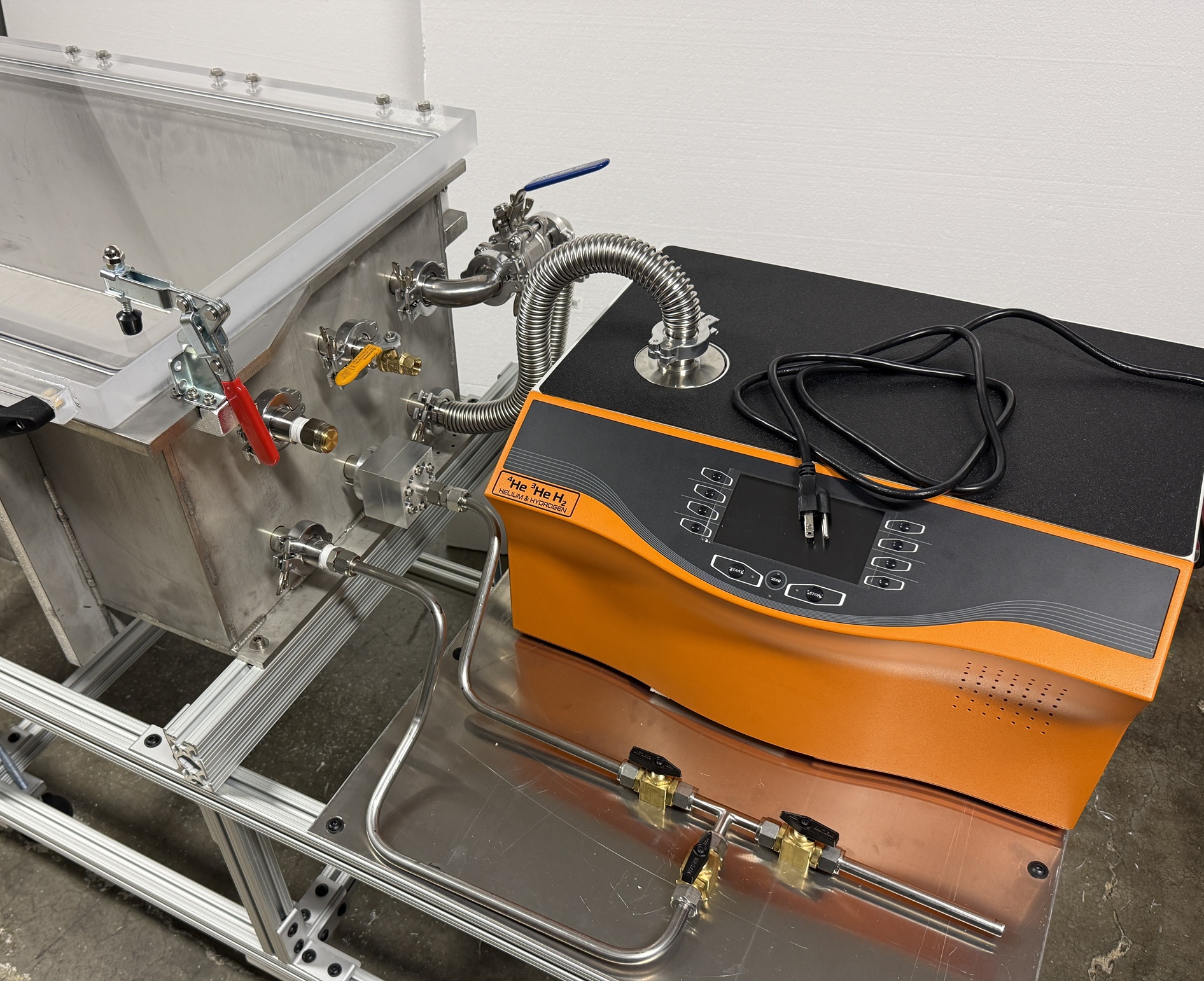
ASTM F2391 is the recognized standard test method for measuring the integrity of packages and seals by using helium as a tracer gas. Rather than watching for a visual indication like a bubble stream, this method relies on a mass spectrometer leak detector that counts the actual tracer gas molecules crossing a leak path, which makes it dramatically more sensitive than visual or pressure-change techniques. The method as written calls for three ingredients: helium serving as the tracer gas, a helium-capable mass spectrometer leak detector, and a test fixture built for the specific package or product being evaluated. Because helium must usually be introduced into a sealed package by puncturing the wall and then patching the injection site, most applications of this technique are destructive, and the patched unit often can no longer be sold. When helium is instead introduced into the headspace before the package is sealed, the finished unit can be tested without damaging it, and the technician simply checks whether helium is escaping from the finished pack.
The standard defines two ways of running the test. In Procedure A, commonly called sniffer or probe mode, the package is charged with helium and the operator sweeps a probe wand over the outside of the package, with the instrument sampling any tracer gas venting from a leak. In Procedure B, the vacuum mode, the package sits inside a sealed fixture that is evacuated; every helium atom that escapes through a leak is swept into the detector, and the instrument reports a calibrated, quantitative total leak rate. The supporting precision data published with the standard reflects Procedure B, and the standard itself points out that sniffer results can drift from operator to operator, since squeezing the pack, scan speed, the number and size of leak paths, background helium levels, and material permeability all influence the reading. Sensitivity is extraordinary by packaging standards: the method can pin down leak rates in the range of roughly 10^-2 down to 10^-5 Pa·m³/s (about 10^-1 down to 10^-4 cc/sec/atm), with finer resolution in vacuum mode than is realistically achievable with a hand probe.
Elevate your package integrity program with ASTM F2391, the reference standard for quantitative tracer gas leak testing of packages and seals. Understanding this protocol in detail is the difference between an arbitrary pass/fail screen and a calibrated, repeatable measurement you can defend in an audit. Don't leave compliance to chance. Secure the official documentation today to safeguard the integrity of your testing procedures with complete confidence.
Shortcomings of this Testing Method
The most practical limitation of ASTM F2391 is cost and complexity. Helium is a consumable gas, mass spectrometer leak detectors are among the most expensive instruments in the leak testing world, and both the equipment and the calibrated leak standards require regular maintenance and verification. Compared to a simple bubble-emission bath or an electronic decay tester, the barrier to entry is significantly higher.
In its most common form, the method is destructive: helium must be injected through the package wall and the site patched. Every step of that repair introduces its own potential leak path, and the patched specimen is typically no longer saleable. Sniffer mode adds a second weakness: because readings vary with the operator's scan speed, probe standoff distance, background helium, and even gas permeation through the packaging material, it is better suited to finding a leak than to measuring it, a fact the standard itself acknowledges by limiting its supporting precision data to vacuum mode. For packages made of plastics that admit gases, permeating gases can also confound sniffer readings. Vacuum mode avoids much of this, but it depends on close-fitting custom fixtures for each package style, so the fixturing cost scales with the product line.
Conclusion
ASTM F2391 occupies the top of the leak-testing sensitivity ladder for packaging. Where bubble-emission and decay-based methods stop at millibar-liter-scale flaws, this method reliably verifies seal integrity against fine leaks on the order of 10^-5 Pa·m³/s and beyond. It is the method of choice when a product genuinely cannot fail: modified-atmosphere food pouches, medical devices, barrier packaging for sensitive electronics, and specialty containers whose contents must not interact with the environment.
Like every tool in this library, the protocol rewards understanding. Knowing that most F2391 applications are destructive and therefore sample-destroying, knowing that sniffer mode is a locating tool rather than a measuring one, and knowing that quantitative results come from vacuum mode with properly calibrated instrumentation are the key ideas to carry out of the standard. With that knowledge, a team can reserve this method for the work it does best: precise, quantitative verification and failure investigation, with faster and cheaper screening methods handling routine inspection.
Strengthen your package integrity program and protect your products with ASTM F2391 capable helium leak testing solutions. CONTACT US today to learn how we can help you ensure the highest standards of safety and quality!
We have more resources with regards to tracer gas and helium leak testing that we invite you to read.
Helium Leak Testing, The Tracer Gas Method ExplainedTop 5 Leak Testing Methods and Techniques Everyone Must Know
See our Helium Leak Testing Systems